
Godox Lux Junior II Review – Retro Flash with Wireless Control
- Marvin Kuhn
- Experience report , Accessories
- 14 October 2026
Table of Contents
A compact flash for retro-style setups
The Godox Lux Junior II is a very interesting little flash for anyone looking for something compact that fits well with retro-style equipment. It looks right at home on a small analogue camera, but unlike many flashes in this style, it does not limit you to purely manual, old-school operation.
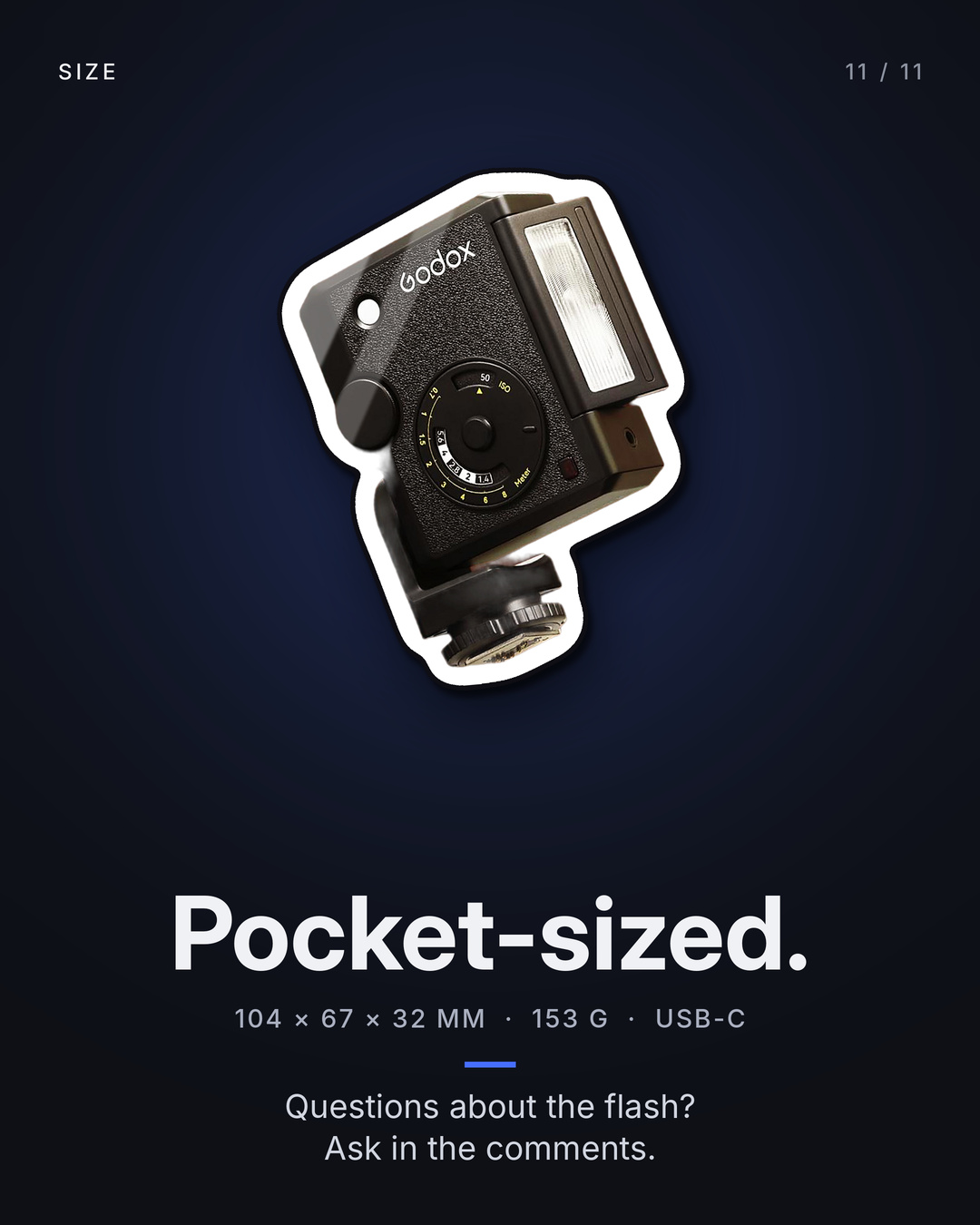
At 104 × 67 × 32 mm and 153 g, it really is pocket-sized, and it has a USB-C port.
What is new compared to the Lux Junior
The original Lux Junior was already a charming retro flash, but the second version adds two features that make it much more practical:
- Wireless connectivity: The Lux Junior II gives you access to the Godox X wireless system. That means it can be integrated into an existing Godox setup and triggered or controlled together with other Godox flashes.
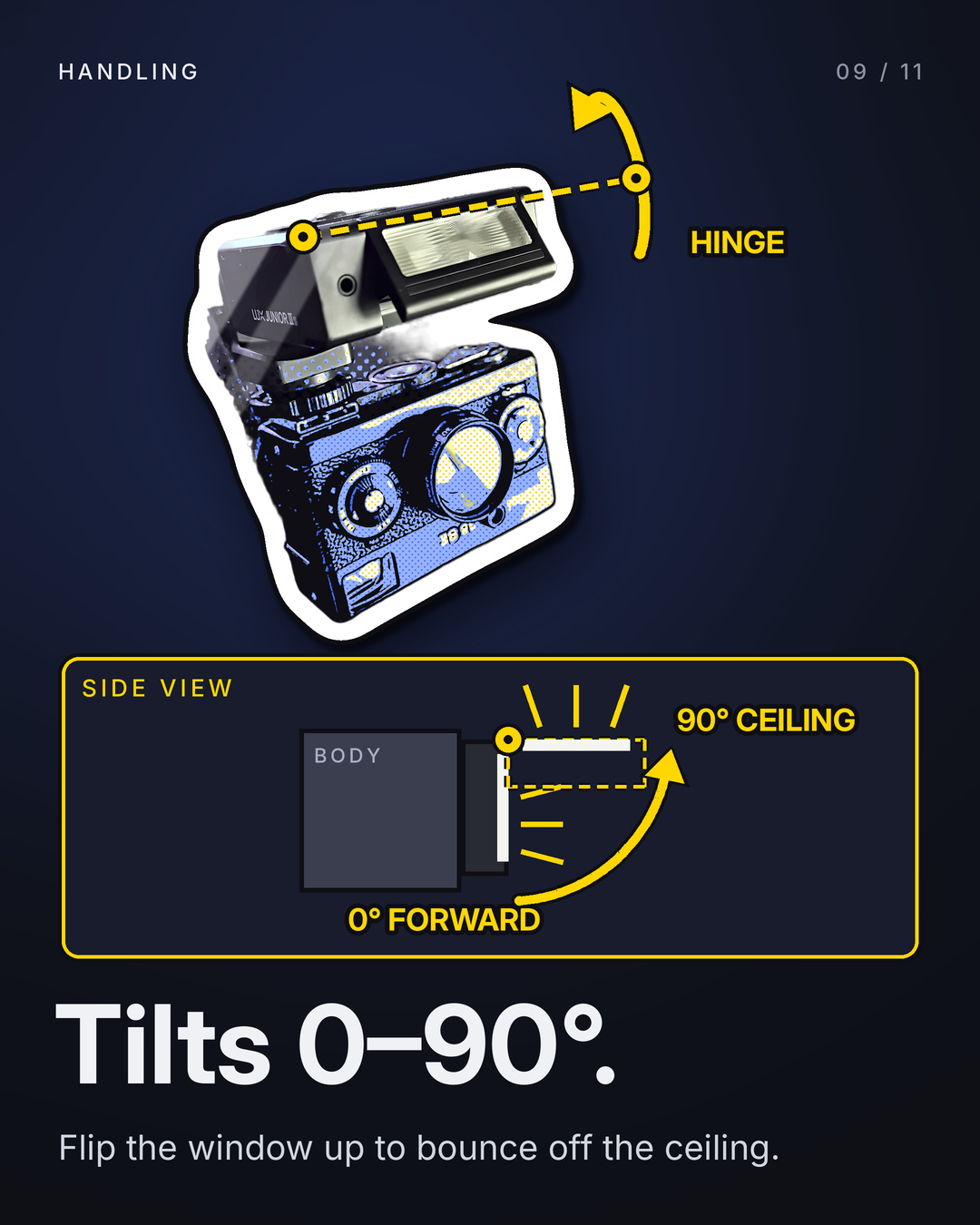
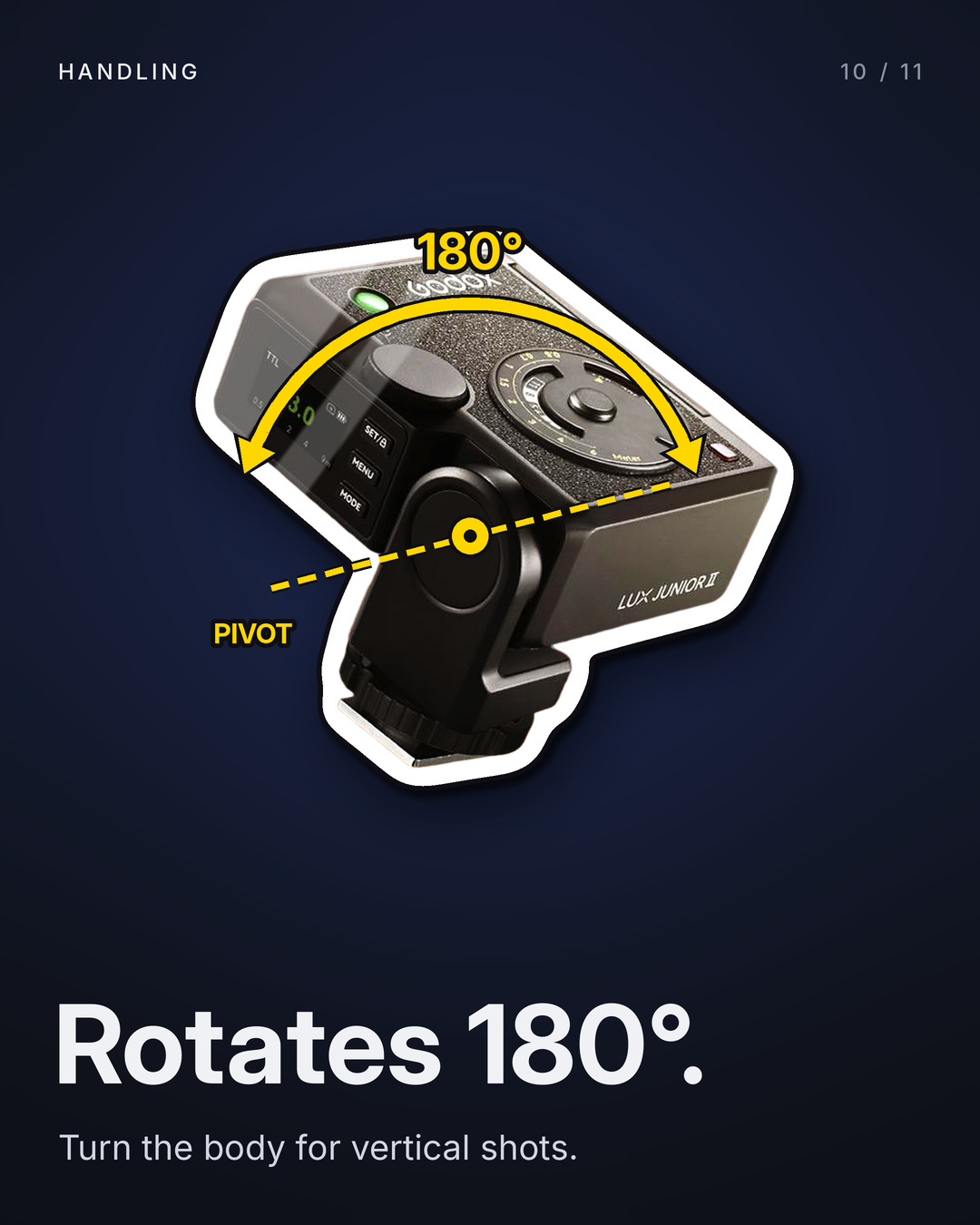
- Tilt and rotate mechanism: The flash window tilts from 0° to 90°, so you can bounce the light off the ceiling. On top of that, the body rotates 180° on its foot. You can turn it upright for vertical shots, which also moves the light source further away from the lens.
On top of that, you can switch between digital and analogue operation, so the same flash can move between a modern mirrorless camera and an old film camera.
Tested at a raclette night
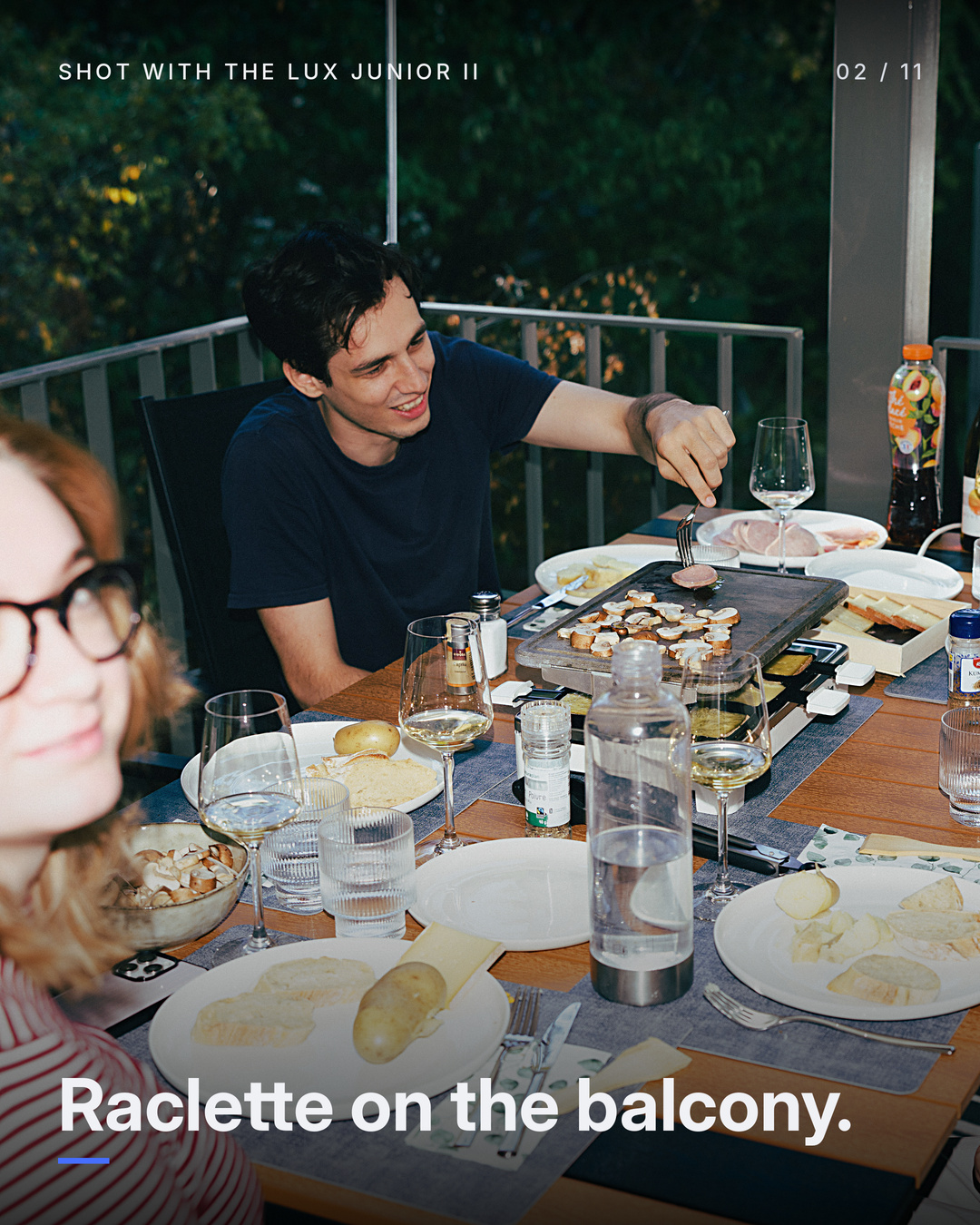
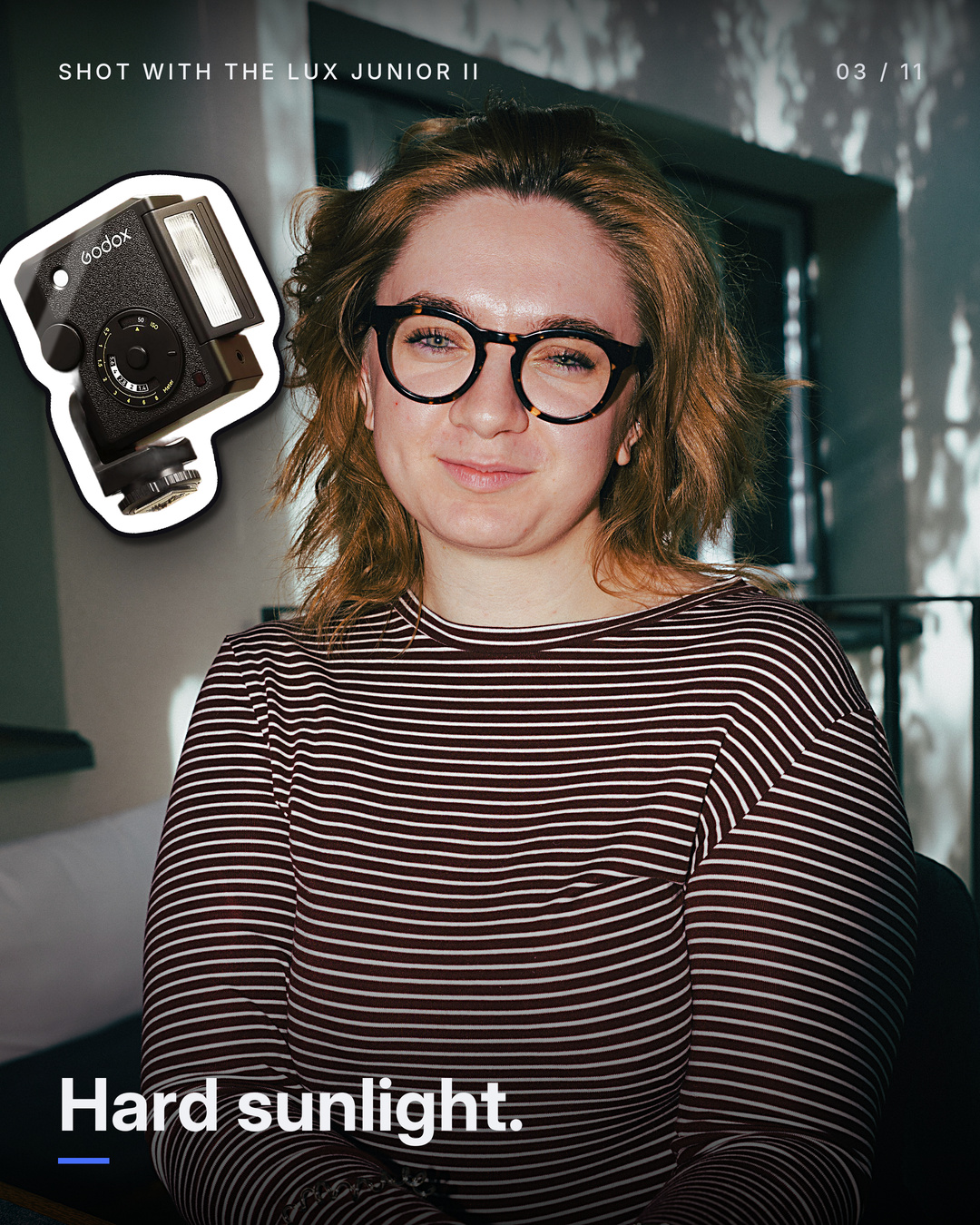
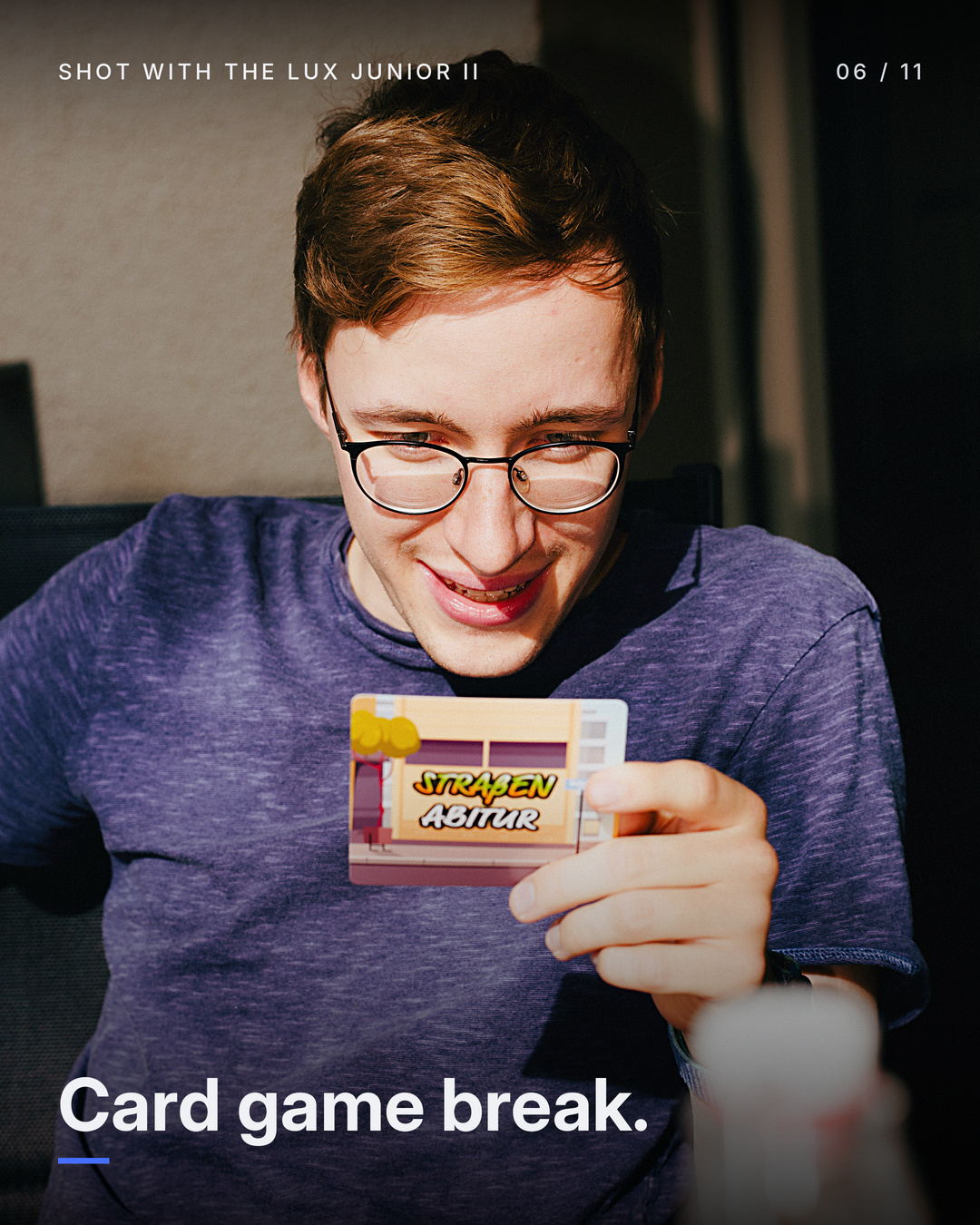
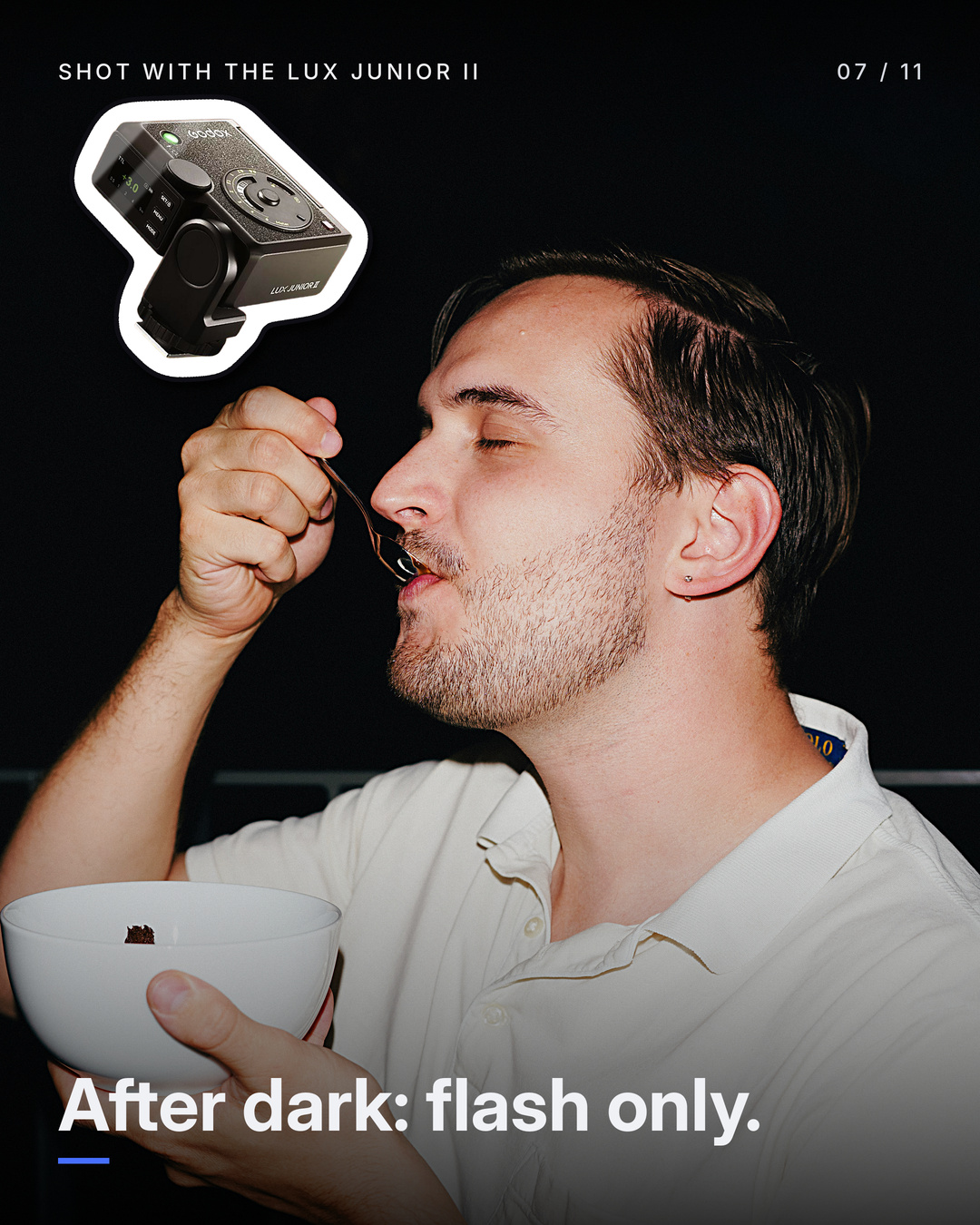
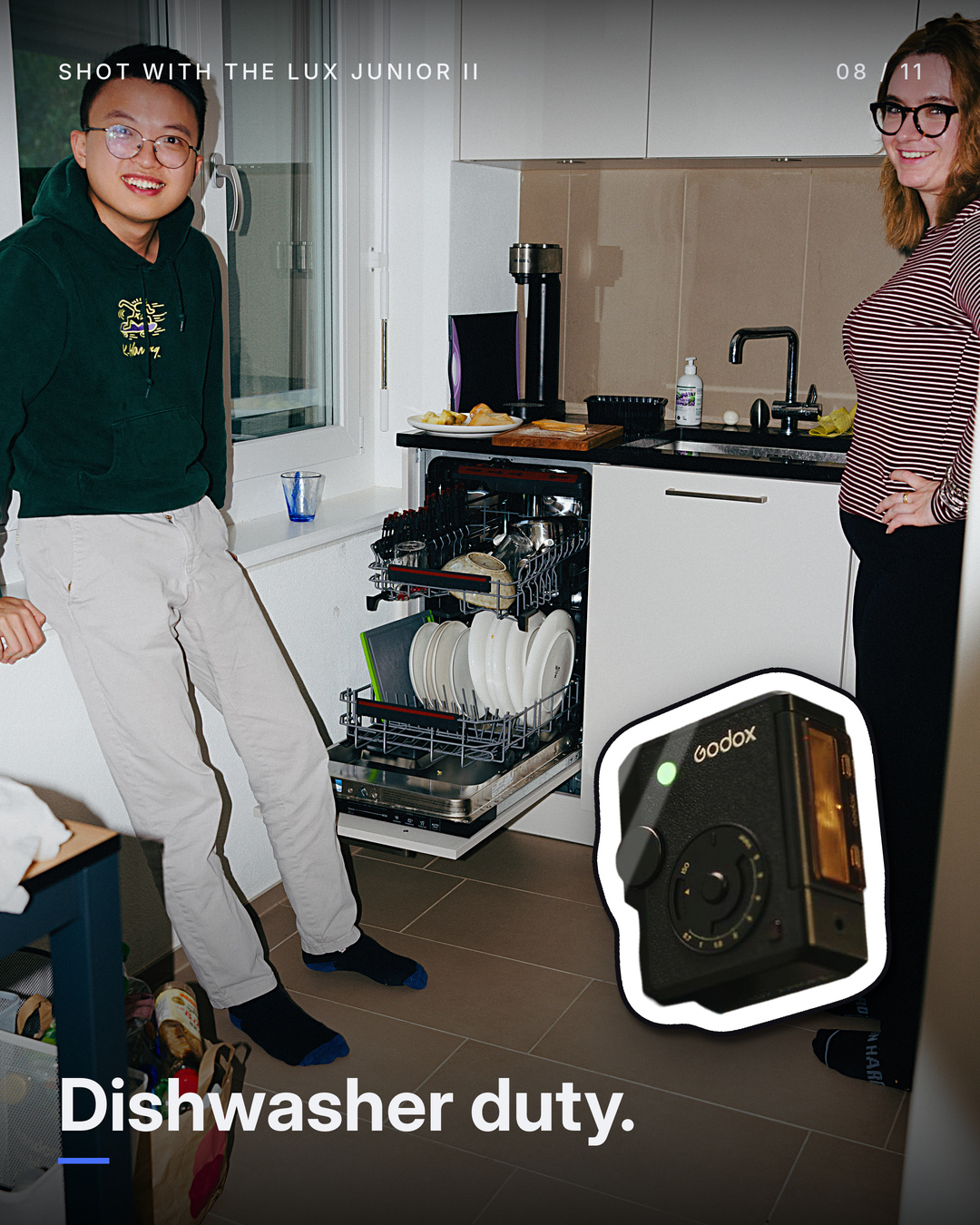
I tested the Lux Junior II at a raclette night on the balcony with friends. During the day, I mainly used it as a fill flash: in hard sunlight, with the sun from behind and with the sun from the side, it brings light back into the faces without looking out of place. After dark, it was the only light source, and it still delivered that classic direct-flash look.


Lux Junior II or IM30 Pro?
Having had the chance to use both the IM30 Pro and the Lux Junior II, I would recommend the Lux Junior II if you are deciding between the two. It simply offers more versatility, with the option to switch between digital and analogue operation, while also giving you access to the Godox X wireless system.
Even if you are only shooting analogue, I would still pick the Lux Junior II:
- More power: The extra output gives you more room to work with, especially when the flash is not used right next to your subject.
- More flexibility with different lenses: With the IM30 Pro, my lens cast a massive shadow into the frame. When you rotate the Lux Junior II upright, the light source sits higher above the lens, so the drop shadows are noticeably smaller.
- Easier to pack: The overall design packs more easily into a camera bag.
Where the IM30 Pro still scores
That does not make the IM30 Pro a bad choice. It can score with its more simplistic approach. Thanks to its simple single-pin connection, it is pretty much guaranteed to work with most camera systems. The only exception are cameras that only offer an electronic shutter. Its design also feels like it is probably the more durable of the two.
If you want a flash that you can put on almost any camera and simply use without thinking about modes or wireless systems, the IM30 Pro still makes sense.
Conclusion
For most people looking for a small, retro-style flash, the Lux Junior II is the more complete package. The wireless connection to the Godox X system and the new tilt and rotate mechanism turn what was a charming accessory into a genuinely flexible flash, whether you shoot digital, analogue or both.


