
Godox ML150RF Review & Lab Test: 150W RGB LED Light
- Marvin Kuhn
- Lab report , Lights
- 30 August 2026
Table of Contents
At first glance, the Godox ML150RF looks like another compact RGB fixture in the 150-watt class. What makes it interesting is its internal light engine. With PaletteLab, Godox uses nine different LED channels designed not only to produce additional colours, but above all to allow precise control over the resulting light.
Many RGB lights can now produce saturated red, blue or green convincingly. White light is more difficult. A high CRI alone does not necessarily mean that a spectrum is particularly even or closely resembles a natural reference light source.
This is exactly where PaletteLab comes in. The question, then, is whether the more sophisticated nine-channel light engine delivers a visible and measurable advantage or is mainly another feature for the specification sheet.
I used the Godox ML150RF both for a portrait shoot and under controlled conditions in the lab.
Build Quality and Handling
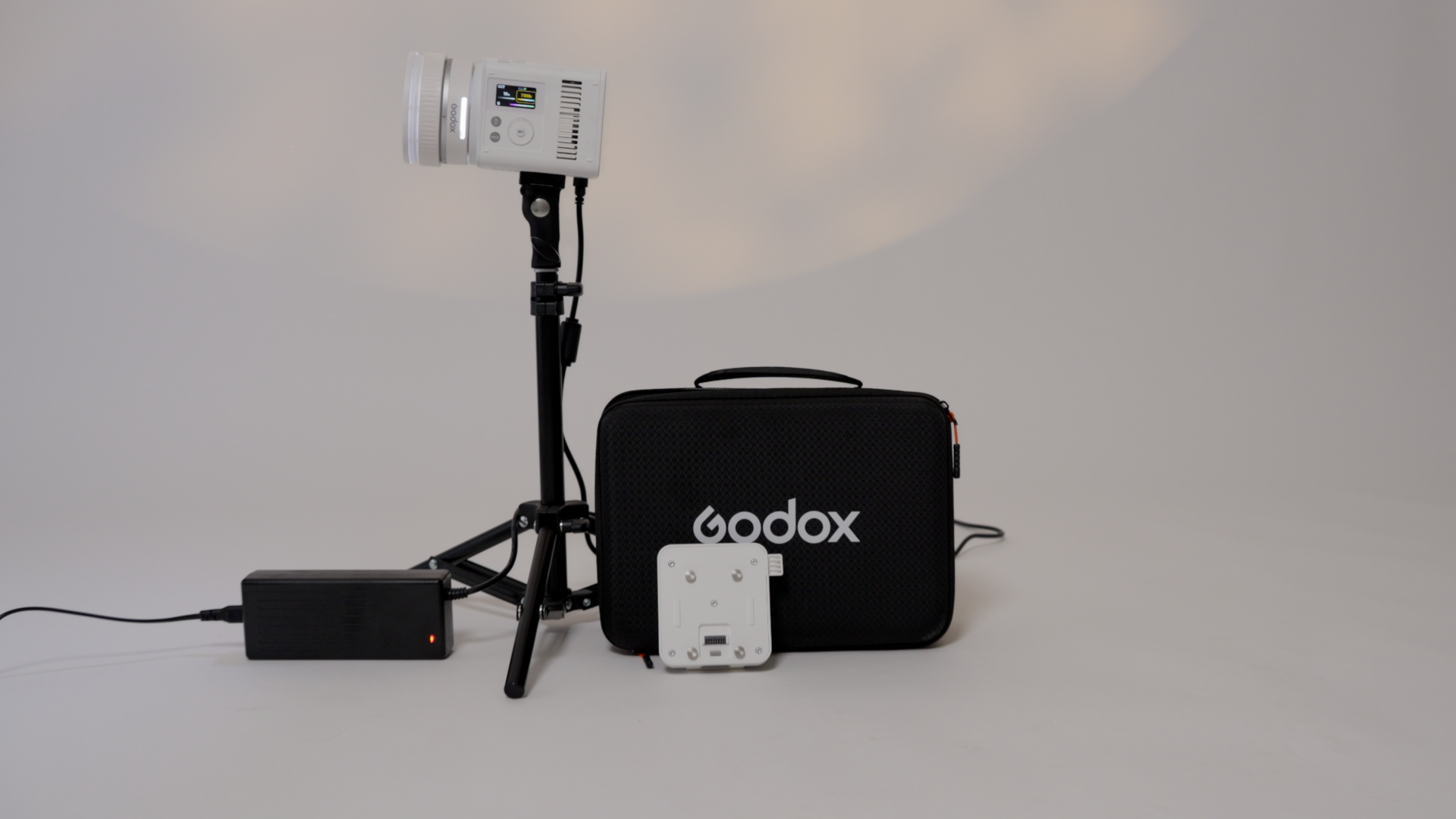
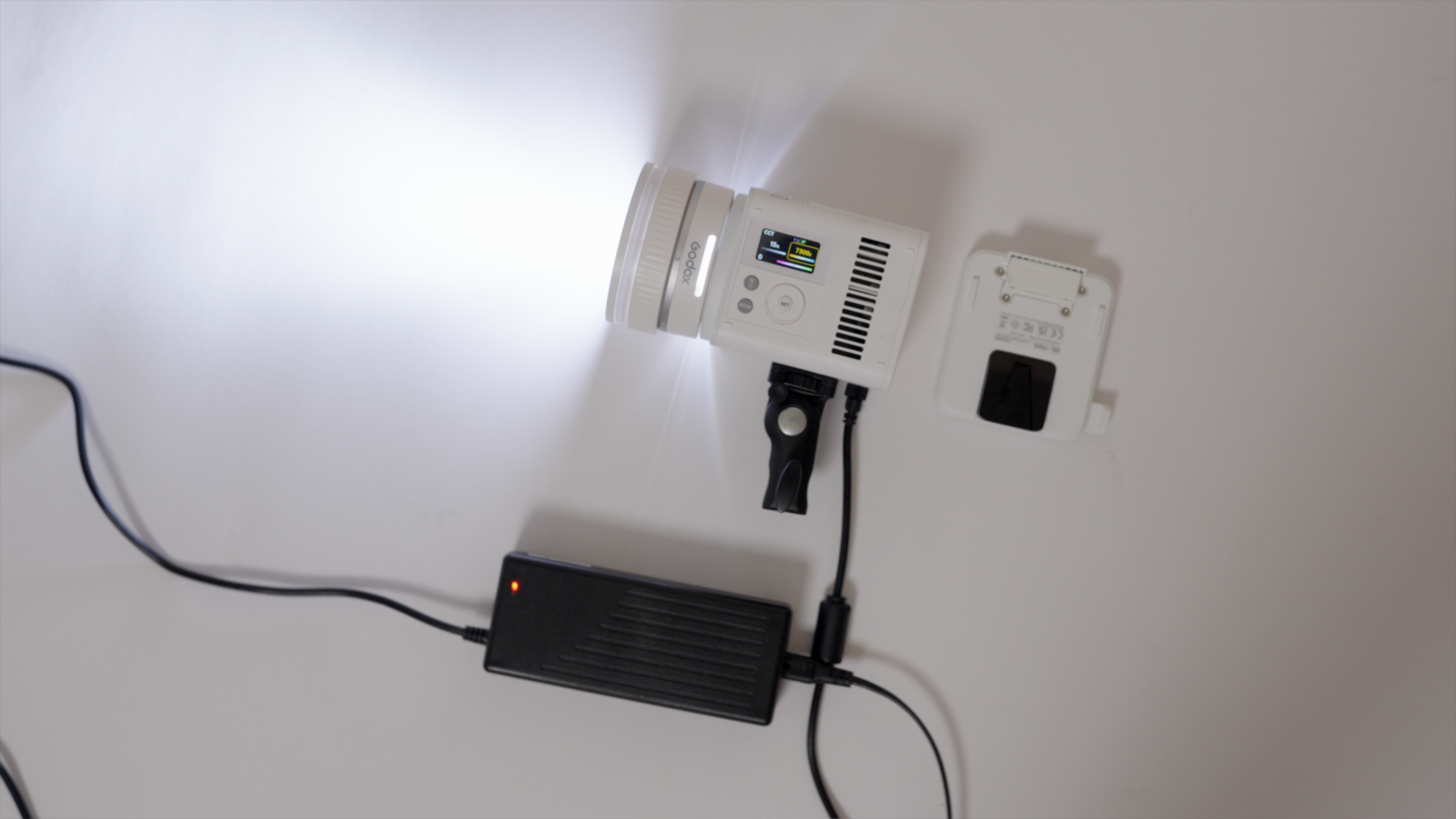
The first thing you notice about the ML150RF is its compact design. For a full-colour fixture in this performance class, the body is small and, at just under one kilogram, pleasantly light. It is not exceptionally small, however, as many fixtures now fall into this size category—just not with such an advanced light engine. Its small size makes it easy to reposition within a set and use in confined spaces, as it requires very little rigging. You can tell from the construction that Godox has made weight savings. A substantial part of the housing is plastic, so it does not feel as solid as a larger professional cinema light. For me, however, this is not a major issue with this model. The compact design is central to the ML150RF concept, and I am happy to accept a little more plastic if it keeps the fixture light.
I particularly like the power connection. The mains connector locks mechanically to the fixture. It may seem like a small detail, but it is useful on set. If a light stand is moved or someone catches a cable, the plug will not simply pull out of the fixture. The ML150RF can also be powered by compatible Godox battery solutions or by a V-mount battery through a suitable adapter. Combined with its low weight, this makes it a mobile full-colour solution that also works well outside the studio.
Operation is straightforward. The main settings can be adjusted directly on the fixture, or the ML150RF can be controlled through the Godox app. In everyday use, I mainly need quick access to colour temperature, brightness and colour. All of these are available without unnecessarily complicated menus.
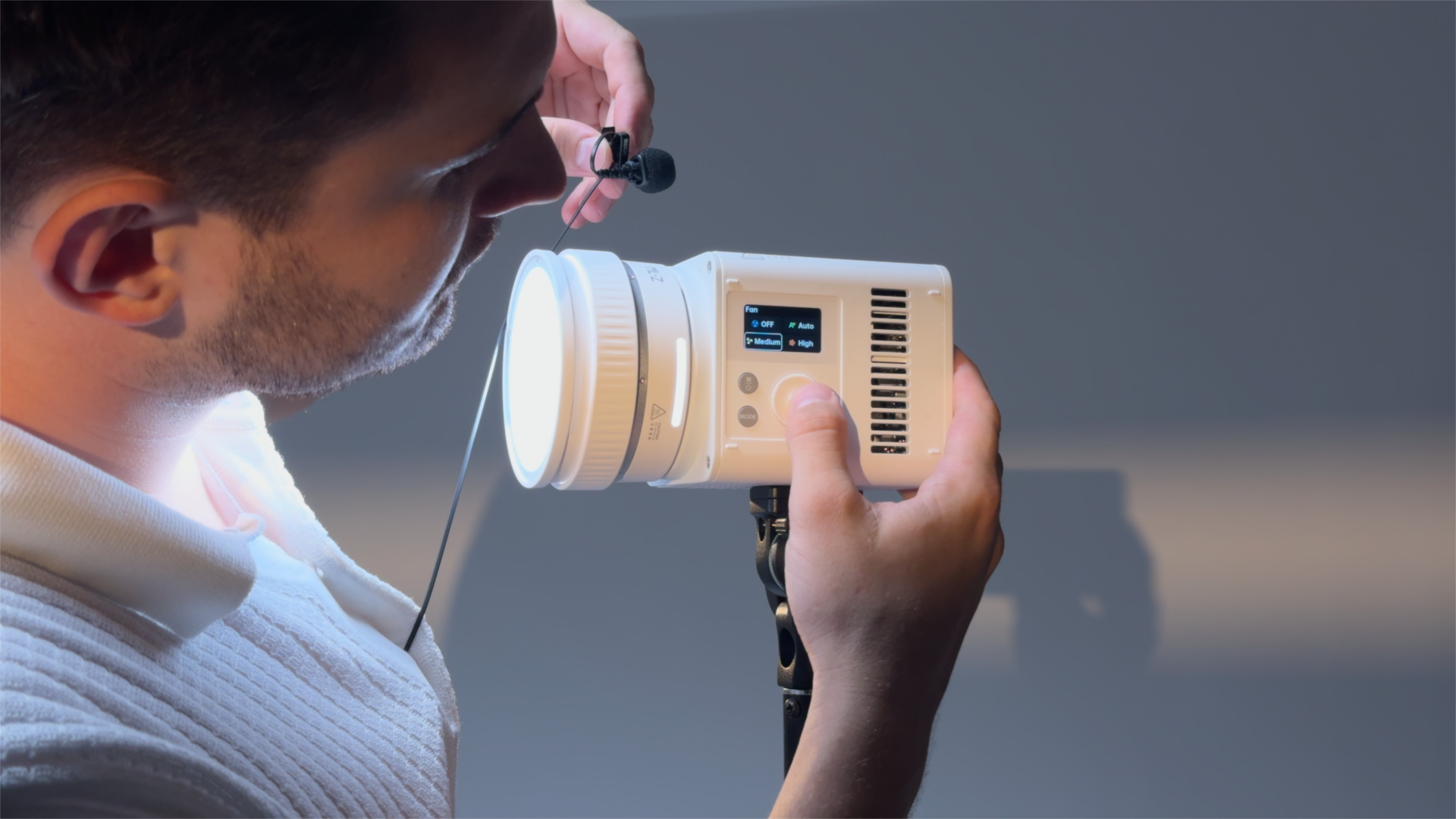
One criticism is the cooling system. At high output, the fan is clearly audible. That hardly matters for photography, but it can be distracting during interviews or in other situations where a microphone is nearby. Godox therefore offers a Silent Mode. It significantly reduces noise, but also limits the thermal load and therefore the available output. For photography, I would normally use the standard mode. For video, Silent Mode is a useful addition.
Light Output and RGB
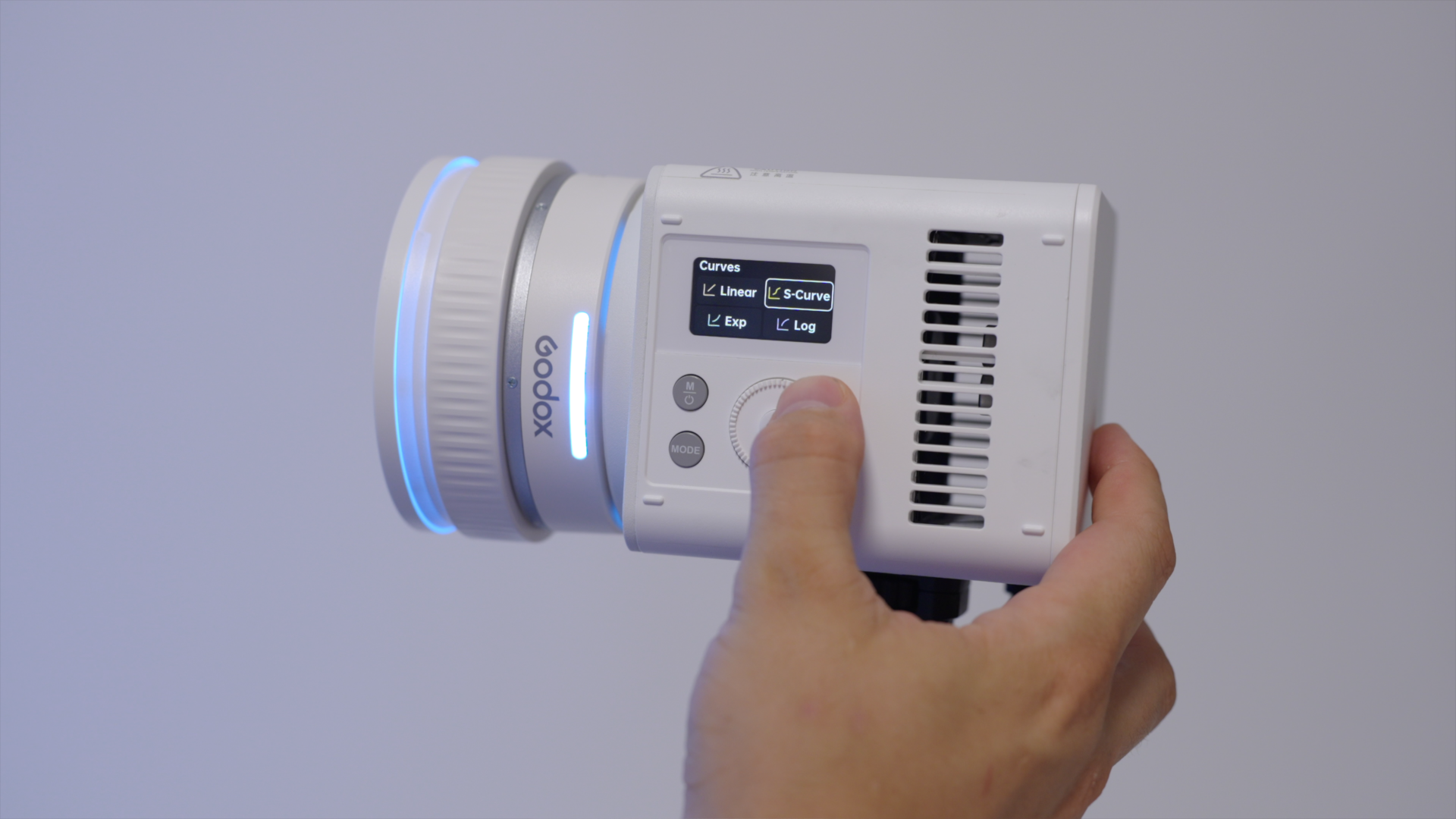
For me, the interesting question with the ML150RF is not only how bright it gets, but also how it uses the available power. It is not especially bright for its class.
White-light output is relatively restrained for the fixture’s rated power. That is a disadvantage at first. At the same time, the output has to be distributed across a sophisticated multi-channel light engine. The additional control over the spectral composition apparently comes, at least in part, at the expense of maximum brightness.
The ML150RF therefore prioritises light quality and colour mixing over maximum output. It was still bright enough for my portrait shoot. Anyone expecting a major increase in brightness based on the power rating, however, may be disappointed. A focused reflector can significantly increase the usable intensity.
There are also clear brightness differences between the RGB colours. These should not be treated as a direct comparison of the optical output of the individual LED channels, as the sensitivity of the human eye varies considerably by wavelength. The difference still matters in practice: anyone trying to light a large area in deep blue will have far less headroom than with yellow or green.
For portraits and smaller creative setups, this was not a major problem. For large-scale RGB applications, however, the ML150RF can reach its limits more quickly.
My Experience in Practical Use
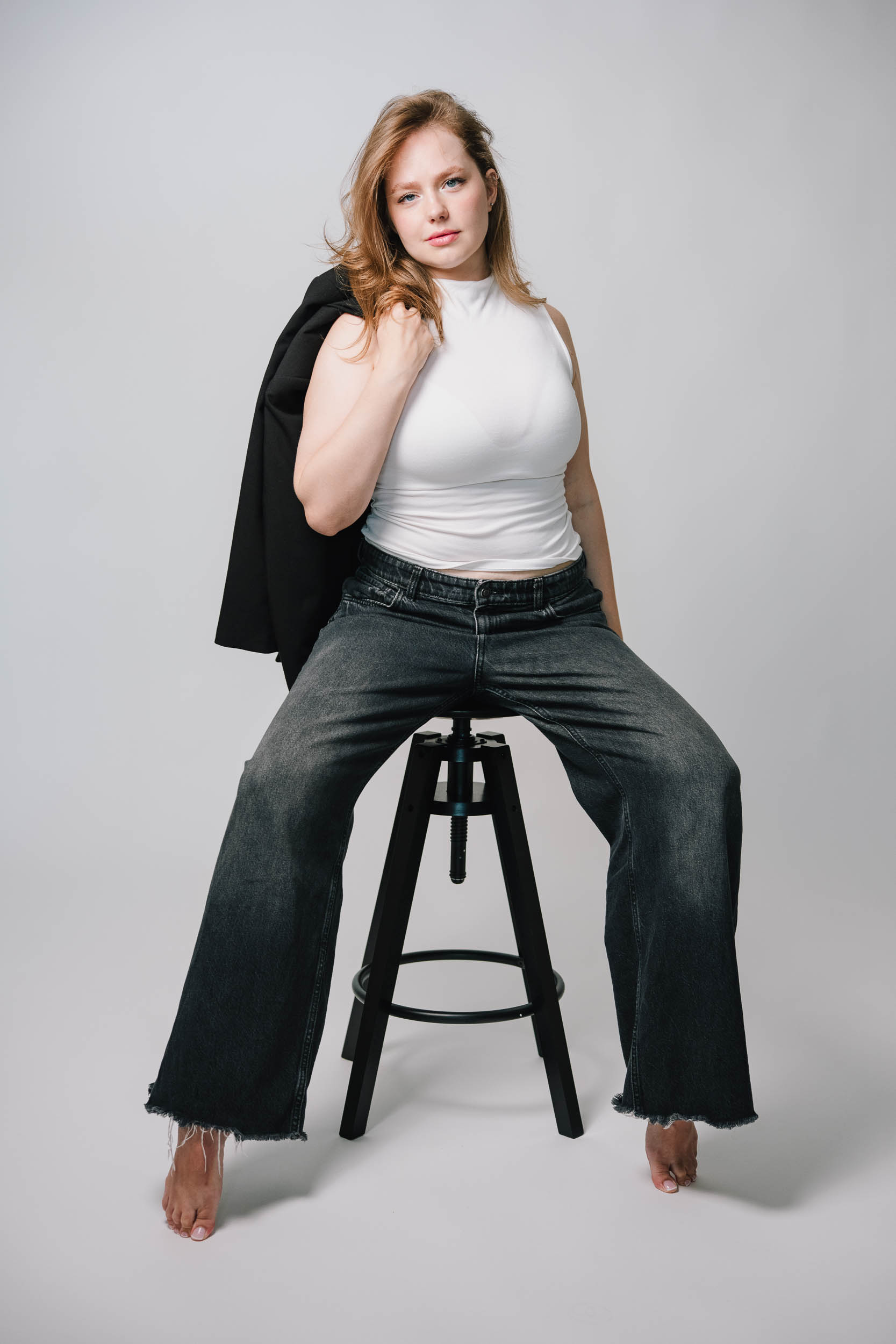


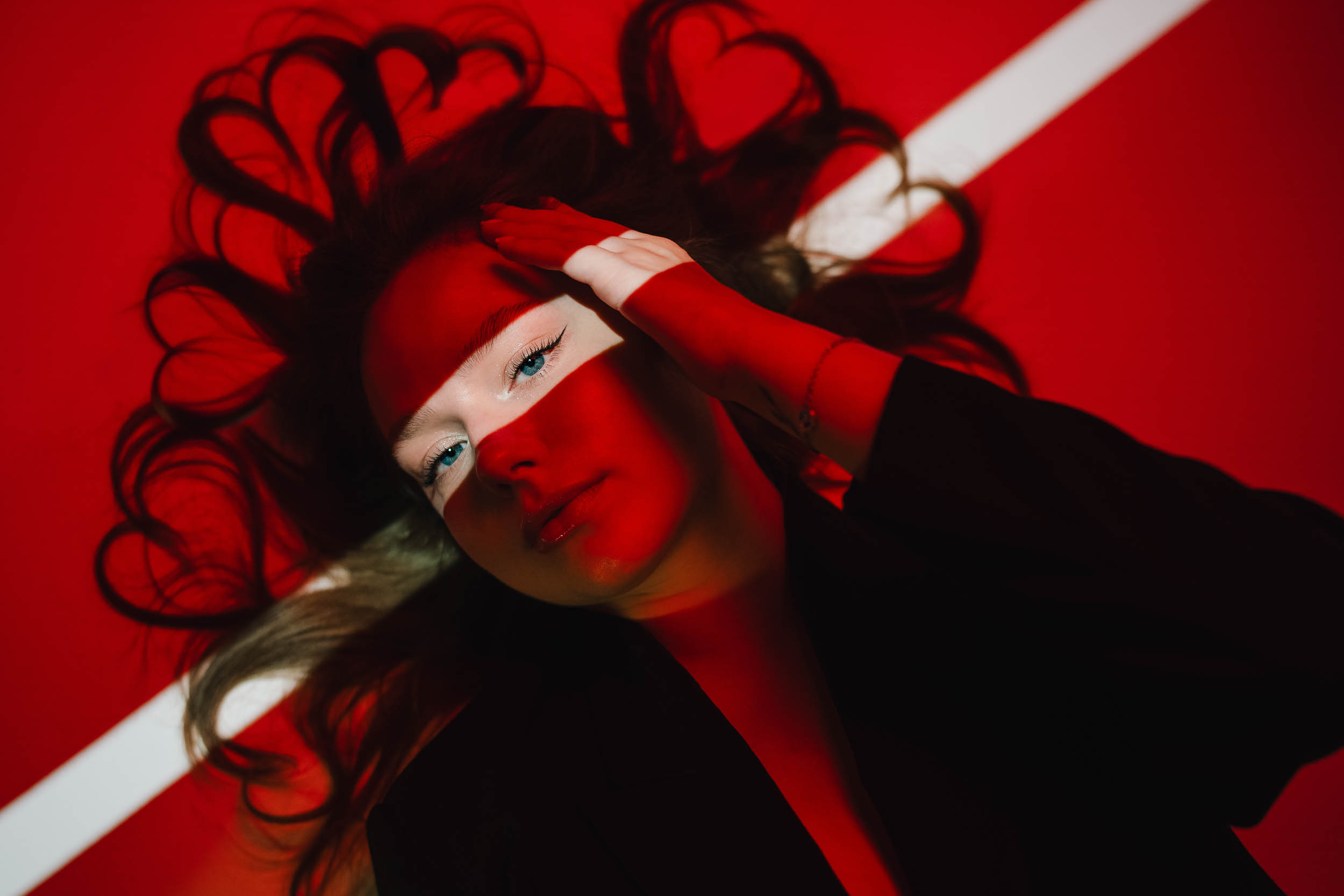
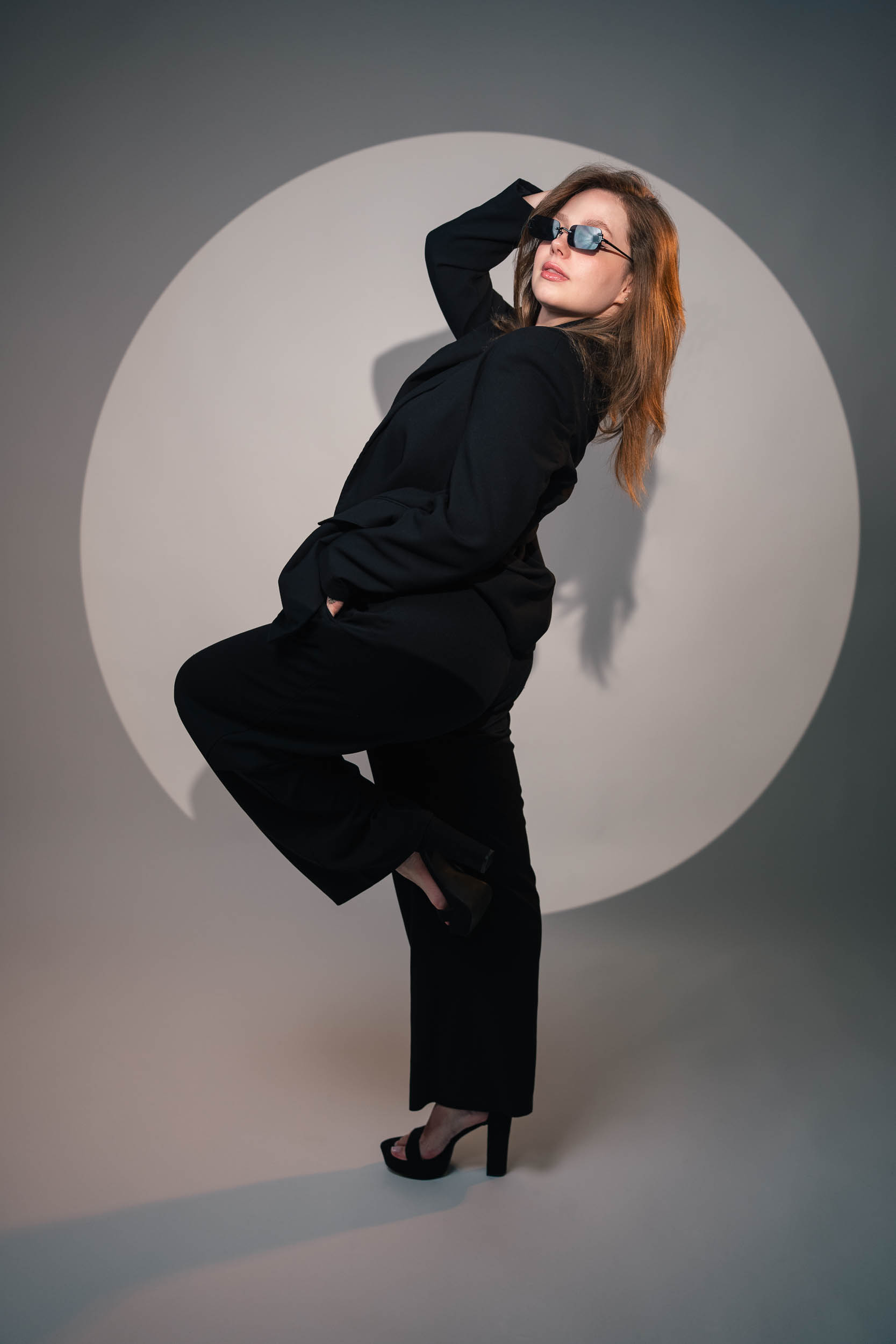

For my shoot, I did not want to use the ML150RF simply as a coloured background light. Any RGB fixture can illuminate a background in blue or red, but that says little about the quality of the actual light engine. I therefore used the ML150RF as the key light on the subject. For the rest of the setup, I used a Godox ML100Bi on the background and an IT32 to add light to the room. This allowed me to assess the ML150RF where white-light quality matters most: on skin.
I was able to shoot a conventional white-light portrait first and then switch directly to a coloured lighting mood without changing the position or modifier. In principle, any RGB fixture can do this. The difference for me was that the ML150RF did not feel like an RGB light where white light is merely an extra feature. Skin tones looked natural and the light looked clean. I did not feel that I was making an obvious compromise in key-light quality simply because I was using a full-colour fixture. For me, this is PaletteLab’s most important practical advantage: the ML150RF works first as a usable white-light fixture and can then also be used as an RGB light. Output remains its most obvious limitation. With larger modifiers or at greater distances, I sometimes would have liked more headroom. For the portrait shoot itself, however, the output was sufficient. Another point concerns PWM behaviour. At fast shutter speeds, I was able to provoke visible banding.
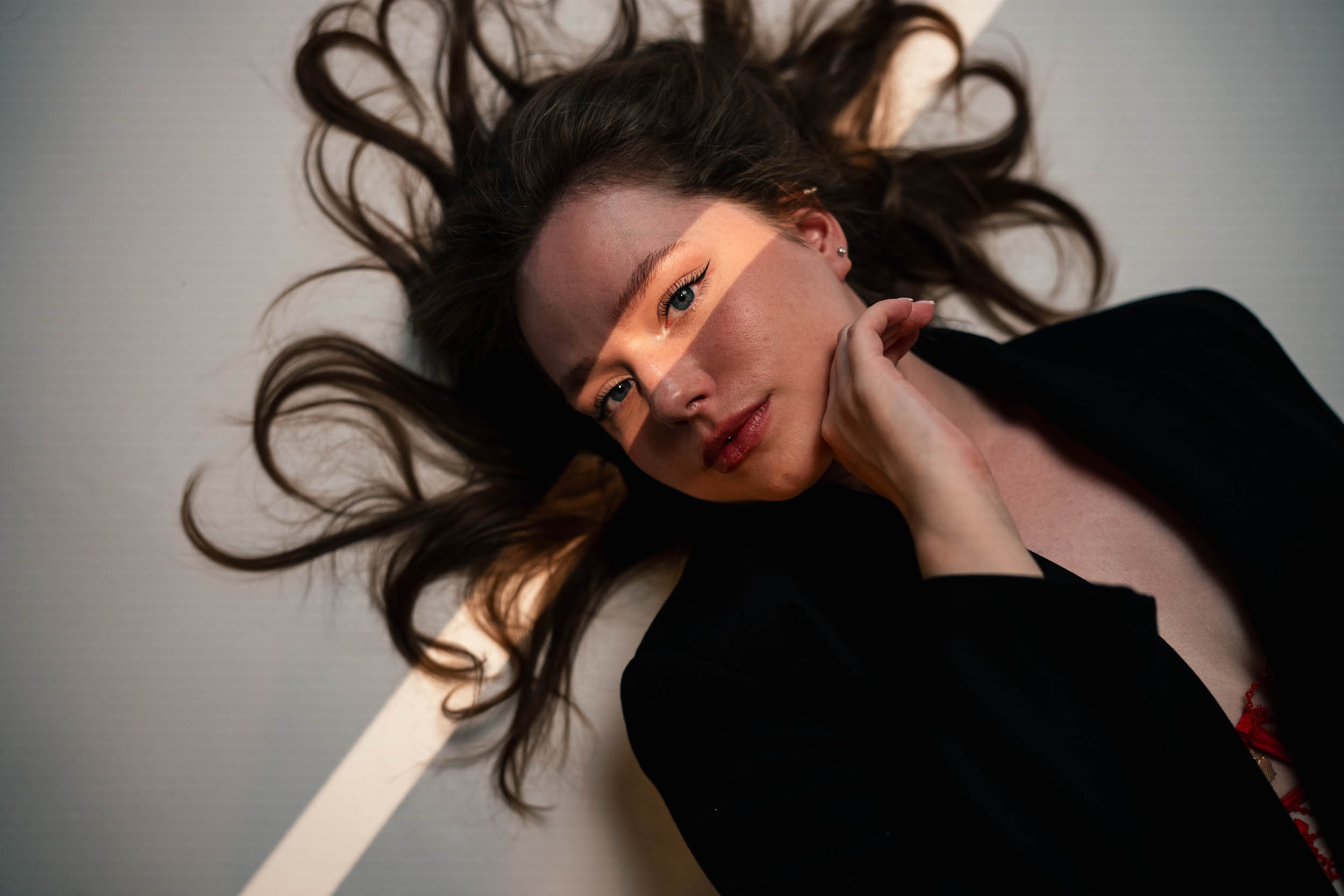
I had no issues during my normal portrait shots. Anyone who regularly works with very fast shutter speeds should nevertheless test the behaviour with their own camera. After using it in practice, my main impression is this: the ML150RF is not designed for maximum brightness, but combines white light and full colour in a compact body. The spectral quality of its white light is more convincing than the output alone would suggest.
Godox ML150RF – Technical Analysis
🔍 Key Specifications and Measurements
| Parameter | 3200 K | 5500 K | 6500 K |
|---|---|---|---|
| Brightness (Lux) | 4,623 | 4,657 | 4,487 |
| CRI (Ra) | 98.5 | 98.0 | 97.9 |
| R9 (Red Rendering) | 98 | 98 | 92 |
| TM-30 Rf/Rg | 97/102 | 97/101 | 96/100 |
| SSI | 91 | 86 | 84 |
| CCT Deviation (MK-1) | 2.81 | 0.30 | 2.77 |
| Duv (Green/Magenta Tint) | -0.00263 | -0.00218 | 0.00066 |
The analysis comprised a total of 36 measurements taken at a distance of 1 m.
Data Overview
TM-30-18
TM-30 Multi Report
TM-30 Comparison
Multiple measurements in direct comparison
Report selection by CCT
All loaded reports are sorted by CCT automatically. The slider snaps to the nearest report.
Color Vector Graphic
Reference and test as closed 16-bin curves.
Normalized Spectral Power Distribution
TM-30 Dashboard
Local shifts and radial visualization as in the standard report.
Local Chroma Shift (Rcs,hj)
Local Hue Shift (Rhs,hj)
Local Color Fidelity (Rf,hj)
Color Sample Fidelity (Rf,CESi)
Direct overview of all 99 CES samples with fidelity values.
Measure Comparisons
Additional comparison view analogous to the TM-30 reference representation.
Color Evaluation Samples
Highlighted skin-tone areas provide practical orientation for portrait colors. Click to zoom.
Chart
<hr>
💡 White Light and Output
White-light output remains relatively consistent between 3200 K and 6500 K. The fixture measured 4,623 lux at 3200 K, 4,657 lux at 5500 K and 4,487 lux at 6500 K. The difference is minor in practice.
Output drops more noticeably at the warm end of the CCT range. At 2700 K, the fixture still reaches 2,880 lux, while at 10,000 K it reaches 4,007 lux.
| Target CCT | Lux @ 1 m |
|---|---|
| 2700 K | 2,880 |
| 3200 K | 4,623 |
| 5500 K | 4,657 |
| 6500 K | 4,487 |
| 10,000 K | 4,007 |
The most useful range in practice is therefore between 3200 K and 6500 K. Here, the available output remains relatively predictable.
Dimming performance is also usable. At 5500 K, the ML150RF produces 581 lux at 10%, 2,462 lux at 50% and 4,657 lux at 100%. The relationship is not perfectly linear, but it is close to the expected progression.
At certain fast shutter speeds, the LED control can produce banding. This does not mean that the fixture inherently flickers or is unsuitable for photography. I had no problems in normal use. Anyone who regularly works with very fast shutter speeds should still test their camera and the ML150RF together beforehand.
The reflector system demonstrates how strongly light shaping can affect usable output. Without a reflector, the fixture measured 4,657 lux at 5500 K. The kit reflector increases this to 11,417 lux, while the standard reflector tested reached 19,402 lux.
The BDR-W55, by contrast, reaches 1,440 lux, but it is not directly comparable to the focusing reflectors. A wider modifier spreads the available light across a larger area and therefore produces fewer lux at the centre of the measurement.
In practical terms: without a reflector, the ML150RF is not particularly powerful. With a suitable focusing modifier, however, its usable output can be increased significantly.
🎨 Colour Quality and CCT Accuracy
The ML150RF’s technical strength lies in the quality of its white light. At 3200 K, it achieves CRI Ra 98.5, R9 98, SSI 91, TM-30 Rf 97 and Rg 102. These are good results for a full-colour fixture.
The SSI score of 91 is particularly interesting. SSI compares the measured spectrum with a defined reference light source and therefore complements CRI and TM-30. A high CRI alone does not necessarily show that the spectrum is even across the entire relevant range. A high SSI additionally indicates that the generated light is relatively similar to the respective reference source.
Quality remains high at 5500 K. Here, the fixture achieves CRI Ra 98, R9 98, SSI 86, TM-30 Rf 97 and Rg 101. At 6500 K, SSI drops to 84, while TM-30 continues to deliver good results with Rf 96 and Rg 100.
These measurements match my impression from the portrait shoot. PaletteLab does not merely deliver high CRI values; it produces an overall white-light spectrum that is useful in practice.
⚠️ Good Light Quality and Accurate CCT Values
The ML150RF also performs well in terms of CCT accuracy. Deviations are particularly small in the middle of the range.
| Target CCT | Measured | Deviation | MK-1 |
|---|---|---|---|
| 2700 K | 2807 K | +107 K | 14.12 |
| 3200 K | 3229 K | +29 K | 2.81 |
| 5500 K | 5509 K | +9 K | 0.30 |
| 6500 K | 6619 K | +119 K | 2.77 |
| 10,000 K | 10,429 K | +429 K | 4.11 |
The Kelvin difference alone is of limited use when comparing colour-temperature deviations. At 2700 K, +107 K initially appears relatively small, but because the Kelvin scale is non-linear, this corresponds to a deviation of 14.12 MK-1. At 6500 K, the deviation is slightly larger at +119 K, but amounts to only 2.77 MK-1 along the colour-temperature axis.
With the fixture set to 5500 K, the measured colour temperature was 5509 K. The deviation is therefore only 0.30 MK-1.
Between 3200 K and 10,000 K, the CCT calibration is relatively accurate. At 2700 K, the deviation is noticeably greater.
Duv also remains mostly close to the Planckian locus. At 3200 K, the measured value was -0.00263, and at 5500 K it was -0.00218. This represents a slight shift below the locus. At 6500 K, the Duv of +0.00066 is effectively neutral.
Combined with the SSI and TM-30 results, this indicates well-controlled white light.
Red Rendering
Red rendering remains consistent across the tested colour temperatures. At 3200 K and 5500 K, R9 reaches 98; at 6500 K, it still reaches 92.
For a fixture intended to serve as a key light for portraits, this is more important than the overall CRI value alone. Skin contains many red and orange tones. A high Ra score can therefore look good on paper without necessarily revealing how well saturated reds are rendered.
The ML150RF delivers solid results across the relevant CCT ranges.
🌈 RGB and Colour Output
The measured brightness levels also differ considerably between RGB colours.
At 100%, the following values were measured:
| Colour | Lux @ 1 m |
|---|---|
| Yellow | 4,248 |
| Green | 1,637 |
| Cyan | 1,246 |
| Magenta | 783 |
| Red | 687 |
| Blue | 441 |
Yellow therefore produces nearly the same measured illuminance as white light at 5500 K, while blue produces less than one tenth as much.
Lux measurements of saturated colours should be interpreted with caution. Photometric evaluation is based on the spectral sensitivity of the human eye. Green and yellow-green wavelengths are therefore weighted more heavily than deep red or blue.
The difference still matters in practice because some colours provide less exposure headroom.
Colour purity also varies. At full output, red reaches a purity of 99.1% and blue 92.9%. Green reaches 77.3%, while cyan reaches 76.7%.
Not every selected hue is reproduced exactly. Blue is particularly noticeable: with a target value of 240°, the measured dominant hue was 256.1°. Magenta measured 310.4° when set to 300°. Red and green, by contrast, are closer to their target values.
A complex multi-channel system therefore does not automatically mean that every RGB hue is perfectly calibrated. For creative photo and video applications, however, I consider this less important than the quality of the white light.
📌 Overall Technical Assessment
From a measurement perspective, the ML150RF represents a clear compromise between light output and light quality. The fixture is not optimised for maximum brightness, but for combining high-quality white light with full-colour functionality.
At approximately 4,657 lux at 5500 K without a reflector, the ML150RF is not among the brightest fixtures in its performance class. There are also considerable differences between some of the individual RGB colours.
In return, its white-light quality is good. At 3200 K, the fixture reaches SSI 91, Ra 98.5, R9 98, TM-30 Rf 97 and Rg 102. At 5500 K, it continues to deliver good results with SSI 86, Ra 98, R9 98 and TM-30 Rf 97.
CCT calibration is accurate across the most relevant practical range. A 5500 K setting produces an almost exact measured result of 5509 K.
The nine LED channels do not automatically make the ML150RF brighter, and RGB colour calibration is not exact across the entire range. They do, however, allow Godox to control the composition of the white light with comparatively high precision.
Its main limitations are therefore output and PWM behaviour at certain shutter speeds.
In short: the ML150RF sacrifices some maximum output in favour of a flexible, high-quality full-colour light engine. If maximum lux is the priority, more powerful alternatives are available. If you want to combine white light and RGB in a compact fixture, the ML150RF offers a well-balanced overall package.
My Conclusion
With the Godox ML150RF, the wattage alone says relatively little about its practical performance. I would not describe it as particularly bright. White-light output is relatively restrained for its class, and saturated RGB colours differ noticeably in their available brightness.
The fan is also audible in standard operating mode. This hardly matters for photography, but Silent Mode may be important for video. PWM behaviour should also be considered when regularly working with very fast shutter speeds.
Light quality, on the other hand, is a strong point. The technical analysis confirms good colour rendering and a convincing white-light spectrum for a compact full-colour fixture.
These measurements match my impression from the shoot. I could use the ML150RF as a key light for a conventional portrait and then switch to a coloured lighting mood without changing the modifier. Its white light did not feel like a secondary function of an RGB fixture, but was genuinely usable as a key light.
This is precisely where PaletteLab offers a practical advantage. The sophisticated light engine does not automatically make the fixture brighter, nor does it ensure that every colour is reproduced perfectly. It does, however, appear to help tune the white light more precisely.
The price of this is limited output. For me, that is an understandable compromise.
The ML150RF is not an especially powerful RGB light, but a compact full-colour fixture with usable white light, good colour rendering and flexible applications.
Related Articles

Disclaimer
This product was provided by Godox for this review and could be retained after the review was completed. No payment was made for the test or its publication. Godox had no influence on my assessment and did not receive the article or review for inspection until after publication.

Copyright © of the product images in the title image belongs to the respective manufacturers. All rights reserved.


