
Good Alternatives to the Sony NP-FZ100? SmallRig, Tilta, Photoolex, Patona and K&F Concept Tested
- Marvin Kuhn
- Experience report , Accessories
- 16 November 2026
Table of Contents
Which battery are you using in your Sony camera? If you’re like most Sony shooters, the answer is probably the original Sony NP-FZ100. And honestly, it’s a great battery: reliable, long-lasting and completely hassle-free. But it has one problem: at around CHF 60 each, it’s pretty expensive, and if you need four or five batteries for a full day of shooting, you’re quickly looking at CHF 300. So I put five alternatives from SmallRig, Tilta, Photoolex, Patona and K&F Concept up against the original to find out whether you really need to spend that much money on a battery.
The Contenders
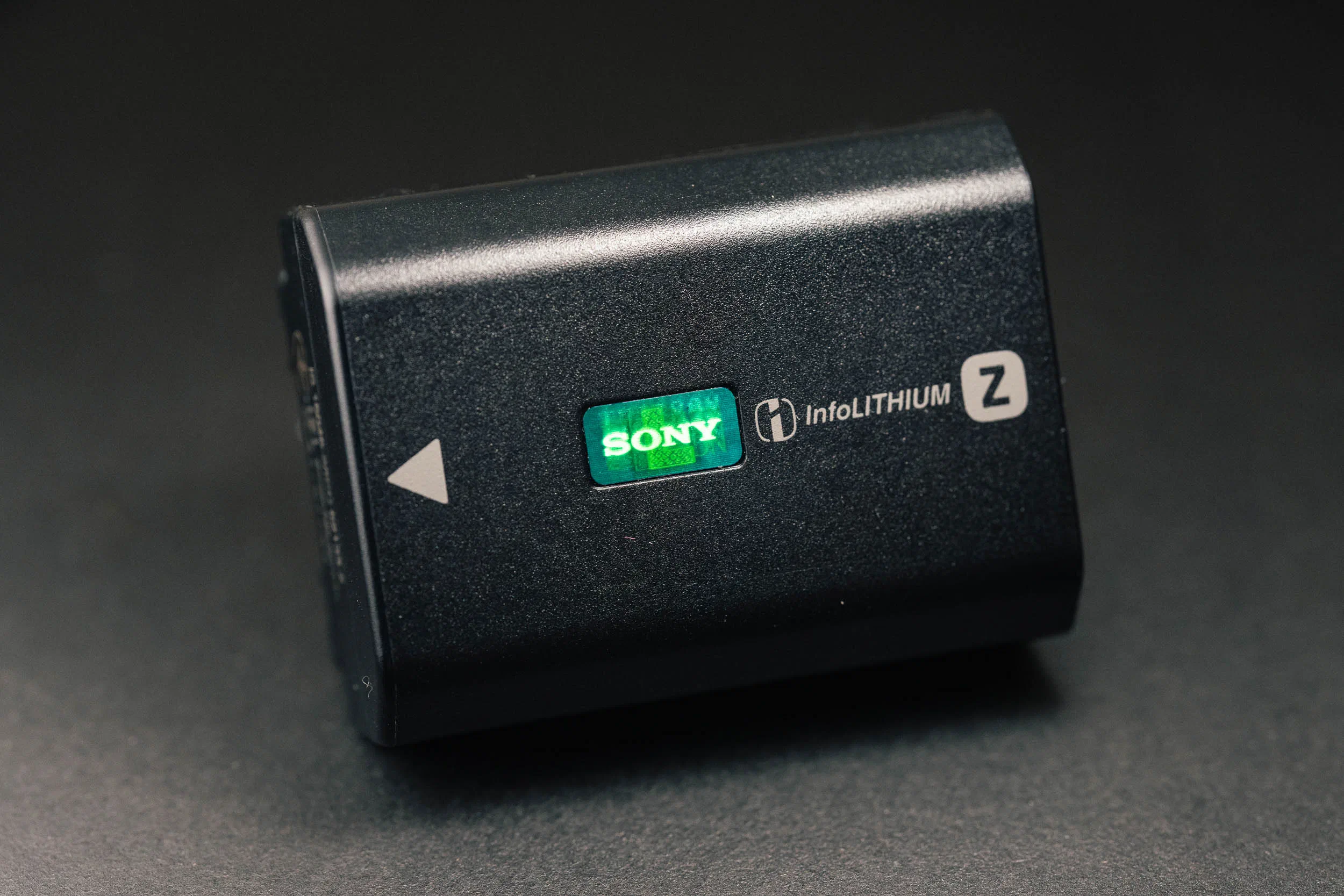
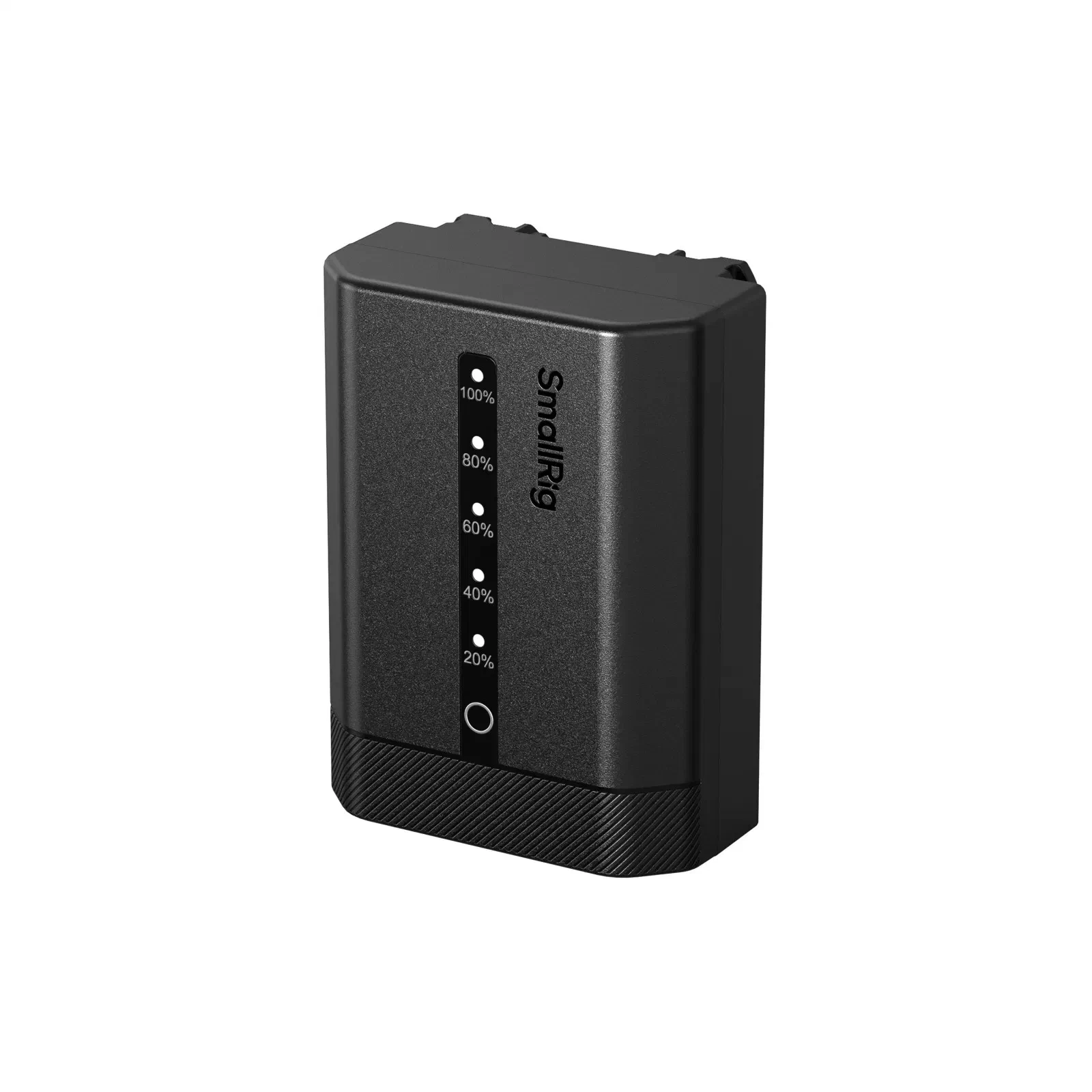
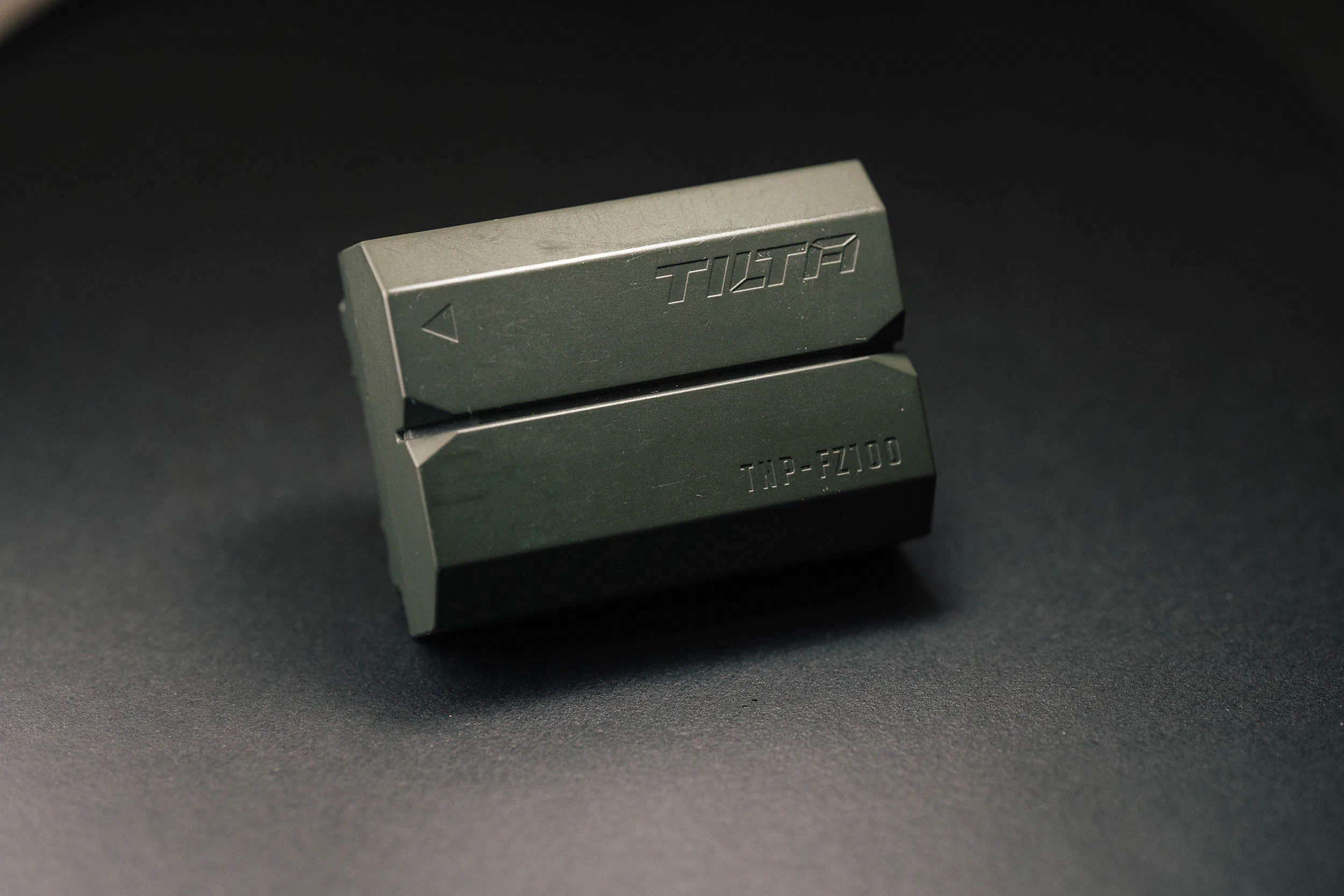
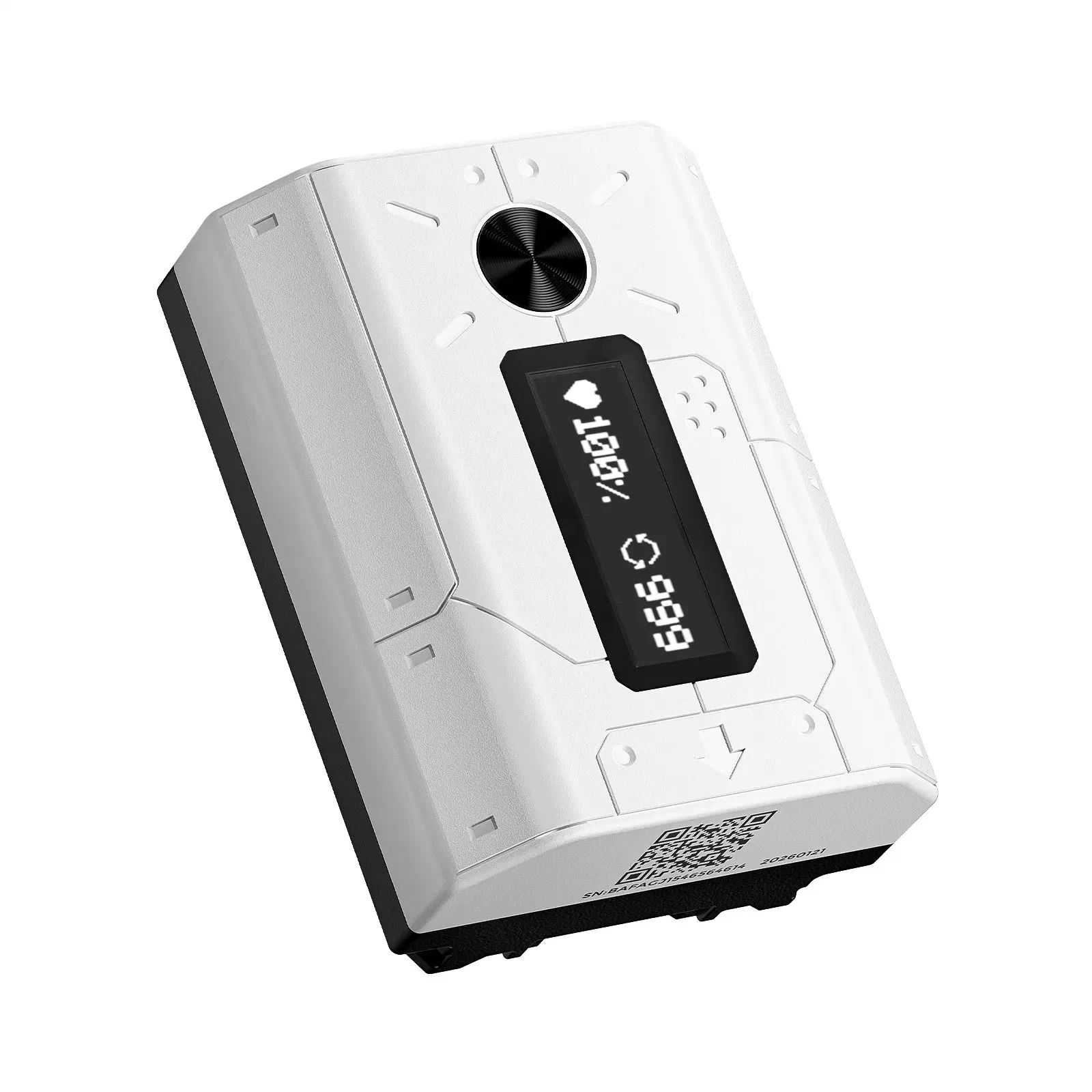
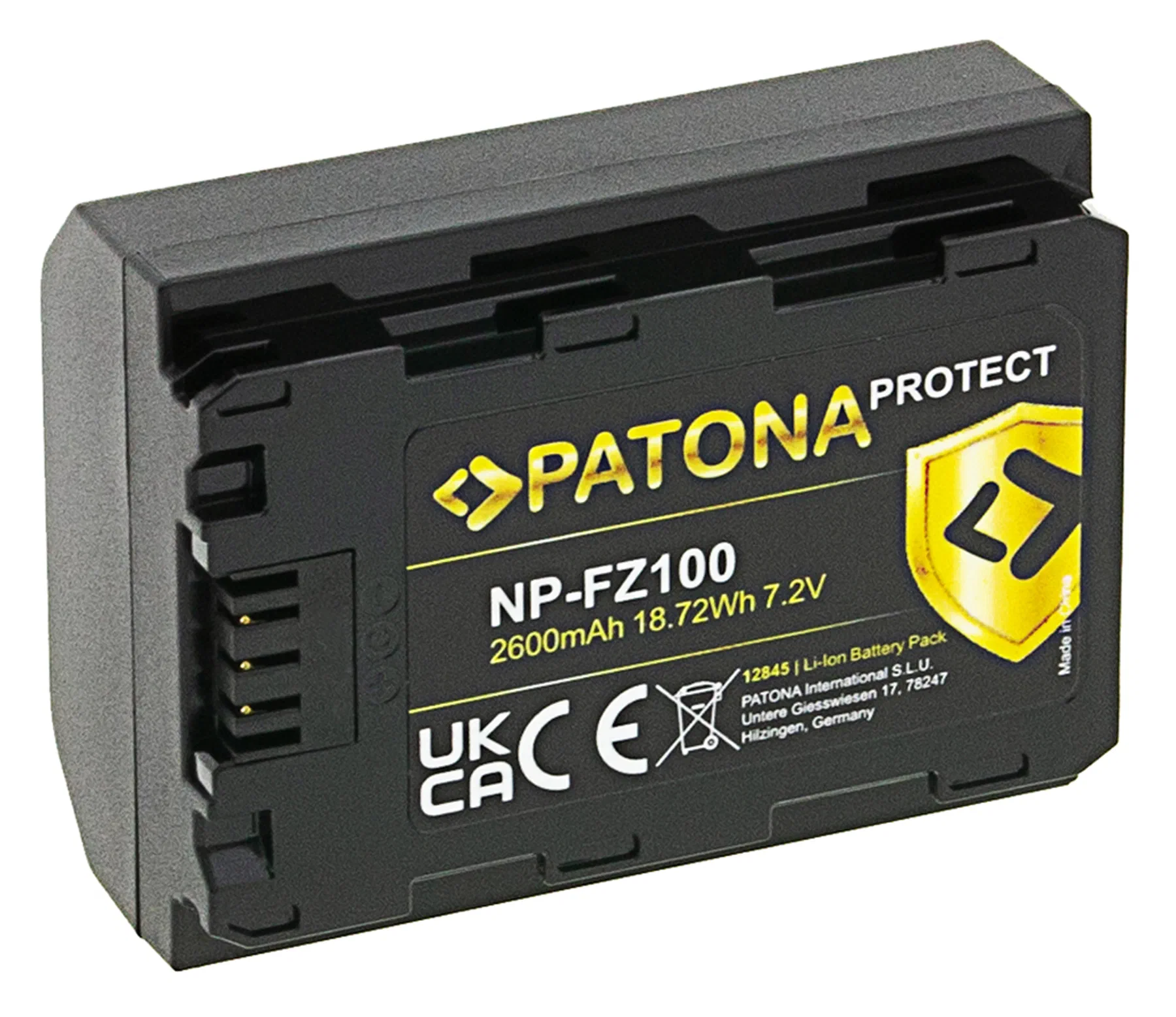
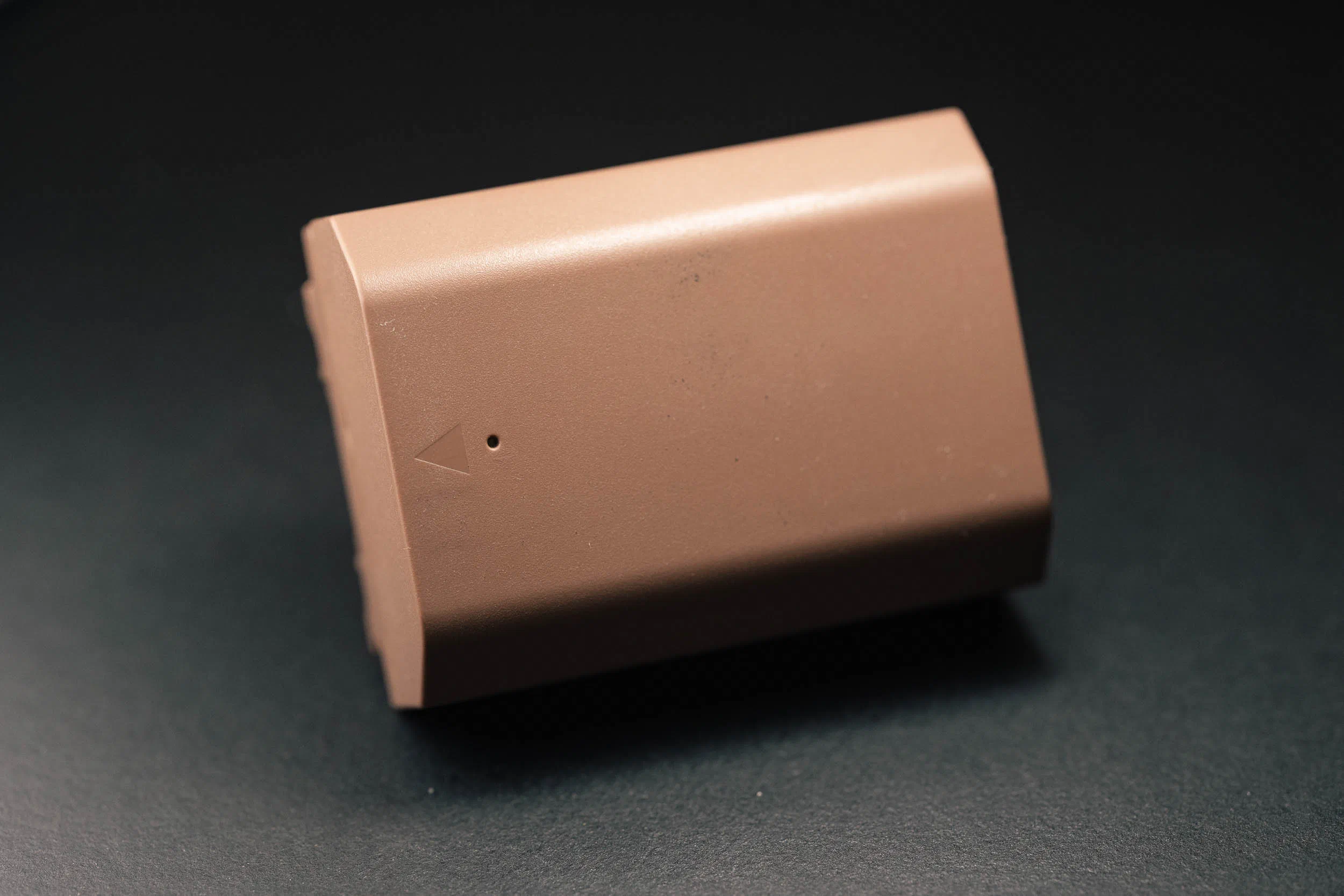
On paper, some of the third-party batteries promise more capacity than the original, several can be charged directly via USB-C, and one even shows battery health and cycle count. But a number on a label is easy to print. Things only get interesting once the battery is in the camera and recording.
Sony NP-FZ100: The original, rated at 2280 mAh, for around CHF 60. It’s the reference in this test, not because it has to win automatically, but because it’s the battery all the others want to replace.
SmallRig NP-FZ100: Rated at 2600 mAh, the SmallRig promises more capacity than Sony. It also adds a USB-C port for direct charging and a built-in charge indicator. Price: CHF 45.
Tilta TNPF-FZ100: The Tilta is rated at 2400 mAh and instantly recognisable by its dark green, distinctive housing. It can also be charged via USB-C but otherwise keeps things fairly simple. Price: CHF 49.
Photoolex BBattery Pro: Probably the best-equipped battery in the test. 2600 mAh, USB-C charging and a built-in display showing remaining charge, battery health and cycle count. Firmware updates are also meant to keep it compatible with newer cameras. Price: CHF 36.
Patona Protect: Rated at 2600 mAh and advertised as fast-charging. This version doesn’t have USB-C, though, so you charge it the classic way in a charger or in the camera. Price: CHF 30.
K&F Concept NP-FZ100: 2500 mAh rated capacity for just CHF 30, making it, together with the Patona, the cheapest battery in the test. As we’ll see, though, the cheapest battery isn’t automatically the best deal.
How I Tested
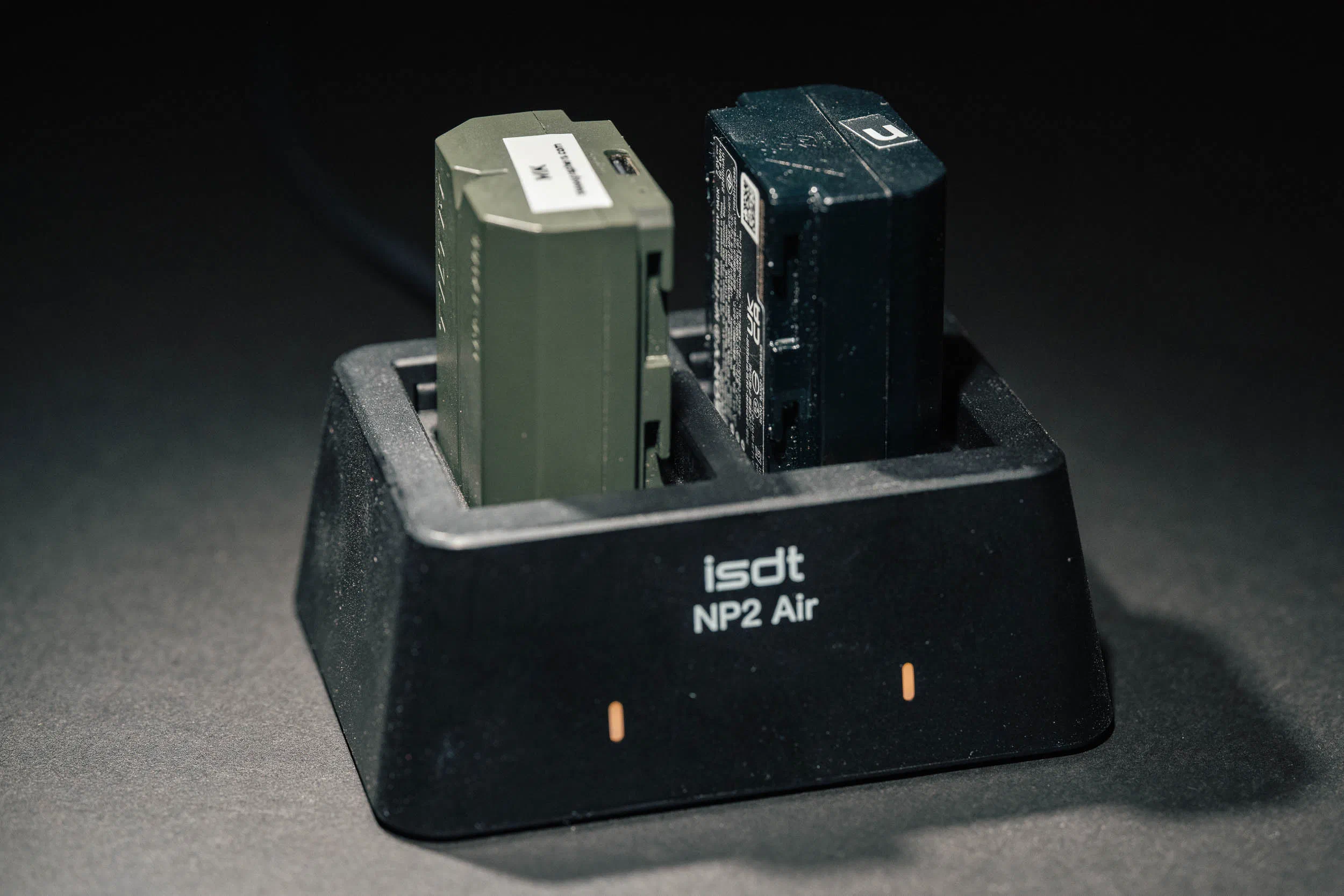
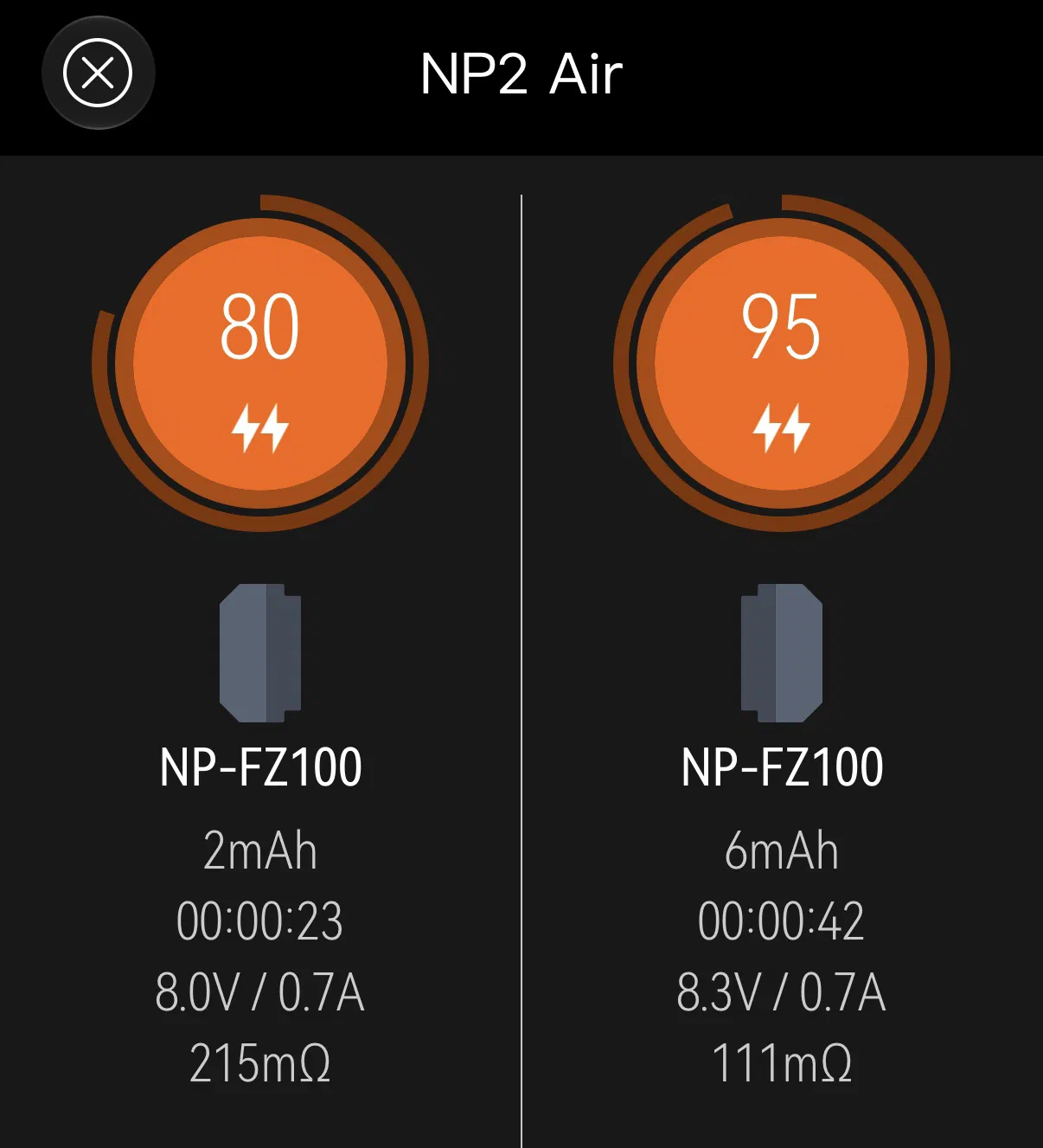
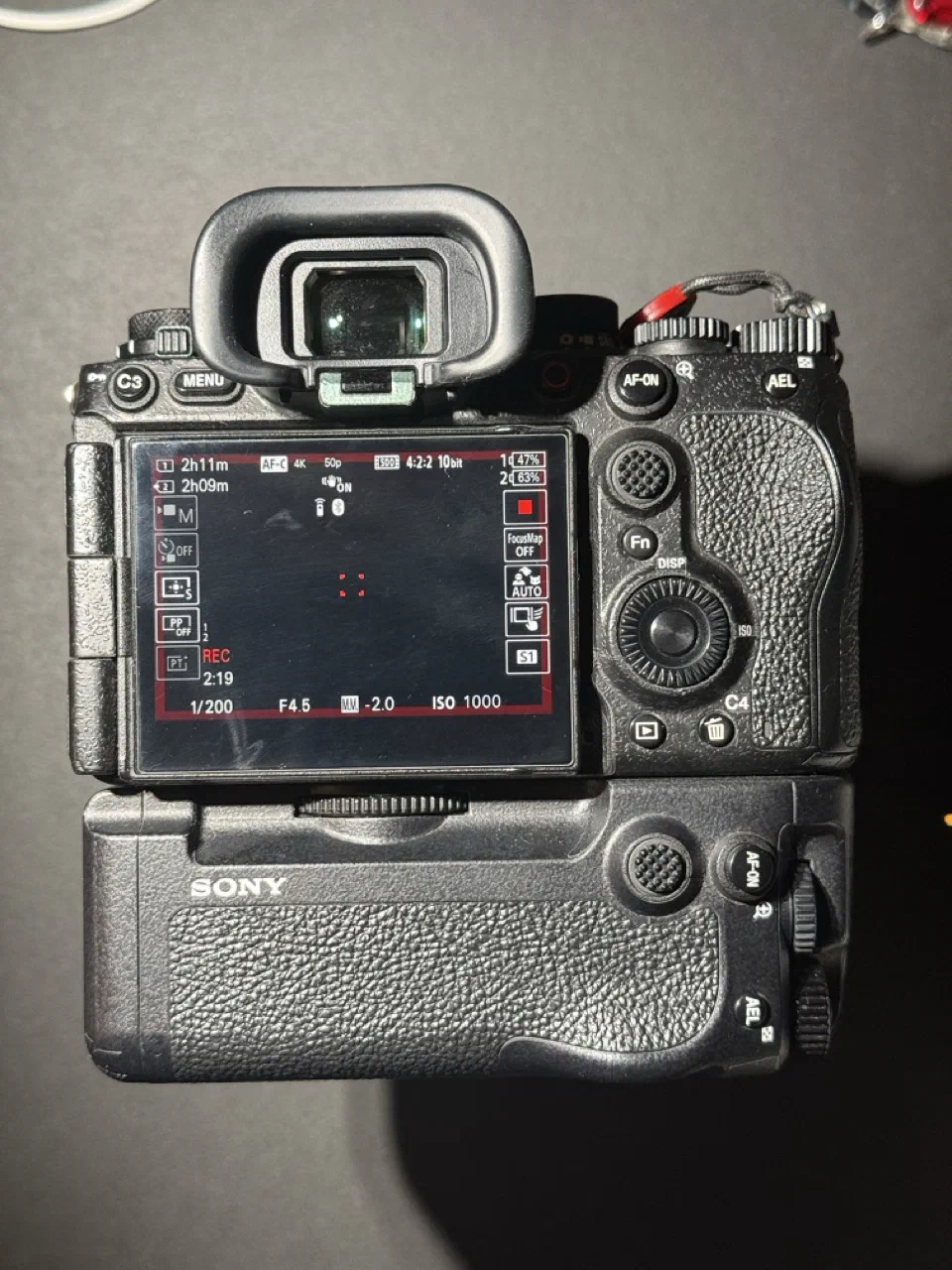
All batteries were tested under the same conditions. Using the ISDT NP2 Air, a charger that measures the actual charged and discharged capacity as well as the internal resistance, I first determined the real capacity of each battery. Then came the practical test: each fully charged battery went into my Sony Alpha 1 II, and I recorded in 4K50 until the camera shut off. I also measured how much charge the batteries lost after seven days on the shelf and, where possible, noted the USB-C charging power.
It’s also important to me to say what I didn’t test: a long-term test over ten or more charge cycles was planned but isn’t finished. How capacity and internal resistance change over time is therefore not part of the rating. All results refer to new batteries.
Capacity: What’s Really Inside?
In measured capacity, the SmallRig came out on top with 2778 mAh, followed by the Photoolex with 2701 mAh and the Sony with 2678 mAh. The Patona reached 2503 mAh, the Tilta 2450 mAh, and the K&F Concept came clearly last with 2109 mAh.
The comparison with the label is even more revealing. Sony is clearly understating here: with 2678 instead of 2280 mAh, the original battery delivered around 117 % of its rated capacity. SmallRig (107 %), Photoolex (104 %) and Tilta (102 %) also kept their promise. The Patona narrowly missed its rating at around 96 %, and the K&F Concept only reached just over 84 % of the promised 2500 mAh. That’s the biggest gap between label and reality in the whole test.
So the biggest number on the box doesn’t automatically mean the biggest battery. The Sony, with the lowest rating, is actually one of the three strongest batteries in the field.
Runtime on the Sony Alpha 1 II
In the camera test, the differences became even clearer. In 4K50, the SmallRig lasted 102 minutes and 51 seconds, just ahead of the Sony at exactly 102 minutes. The Photoolex managed 98:41 minutes, the Patona 92:20, the Tilta 88:08, and the K&F Concept shut off after just 70:02 minutes.
So technically the SmallRig won the runtime test, but only by 51 seconds. In practice, Sony and SmallRig are level, and the Photoolex isn’t far behind either. The K&F Concept is a different story: it gives up almost 32 minutes earlier than the original, and that’s a difference you’ll definitely notice on a shoot.
It’s also striking how differently the batteries convert their energy into runtime. If you divide the runtime by the measured watt-hours, the Sony gets the most out of it at around 5.3 minutes per Wh, while the K&F Concept achieves the least at around 4.6 minutes per Wh. So the K&F not only has less capacity, it apparently also makes worse use of it in the camera.
Internal Resistance
With internal resistance, lower is better. A low value means the battery can deliver current under load without the voltage dropping sharply. That matters especially with power-hungry cameras like the Alpha 1 II and during long video recordings.
Surprisingly, the Photoolex delivered the best value at 51 mΩ, even ahead of the Sony at 65 mΩ. The SmallRig sat solidly mid-field at 88 mΩ. Tilta and K&F Concept both came in at 120 mΩ, and the Patona had the highest internal resistance in the test at 129 mΩ.
One important caveat: internal resistance isn’t a fixed value. The ISDT NP2 Air measures it continuously while charging, and with some batteries the value changed noticeably over the course of the charge. The screenshot in the gallery under “How I Tested”, for example, shows readings taken right after charging started, which are still well above the values listed here. So the numbers are best understood as a comparison between the batteries rather than an exact lab measurement.
Standby Loss and USB-C
After seven days without use, the Sony and the SmallRig each lost around 4 % of their charge, the Patona 5 %, and the Photoolex and K&F Concept 6 % each. The Tilta showed the highest loss at 8 %. None of this is a big deal in everyday use, but if you like to charge your batteries a week before a shoot, you’ll start a little fuller with the Sony or SmallRig.
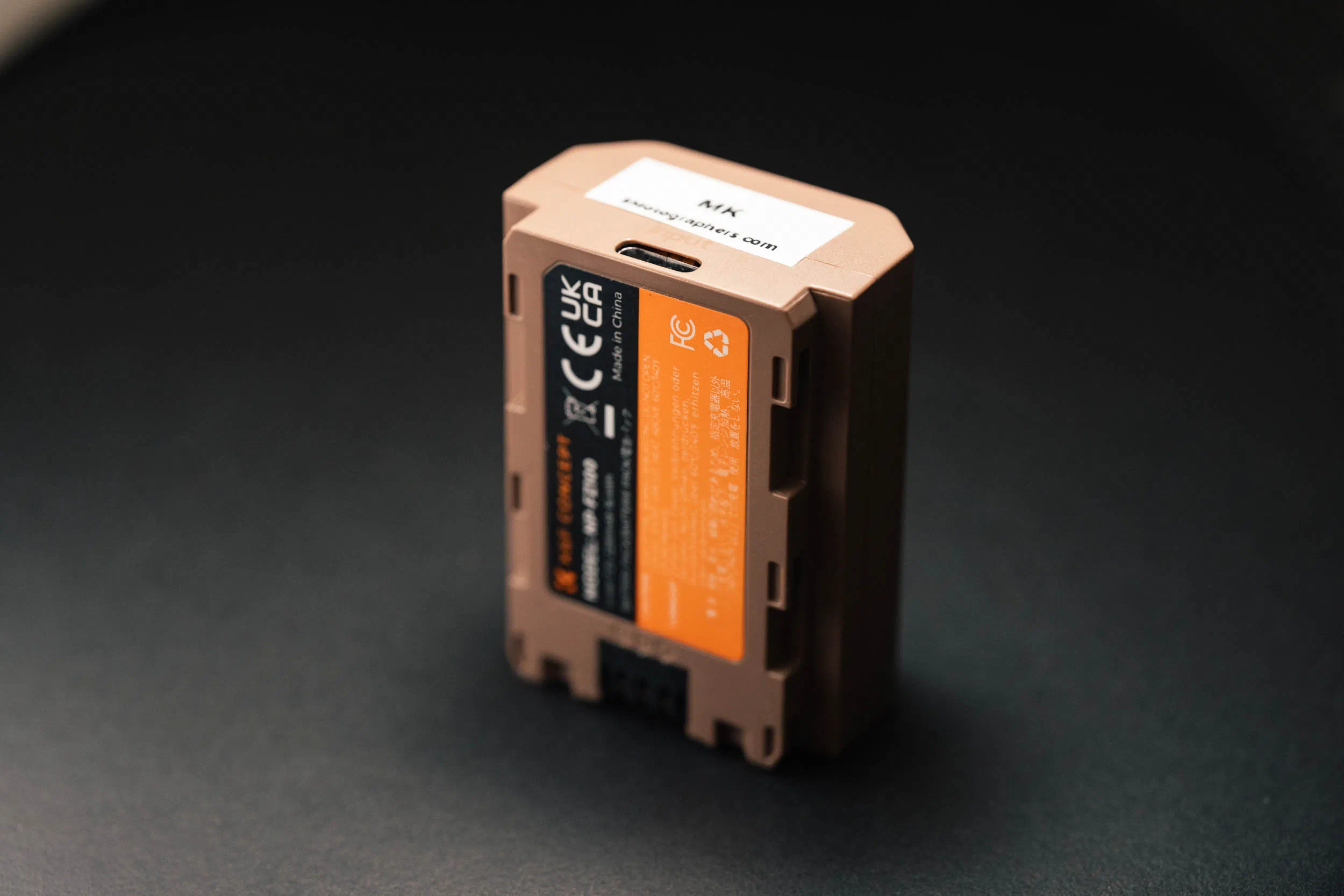
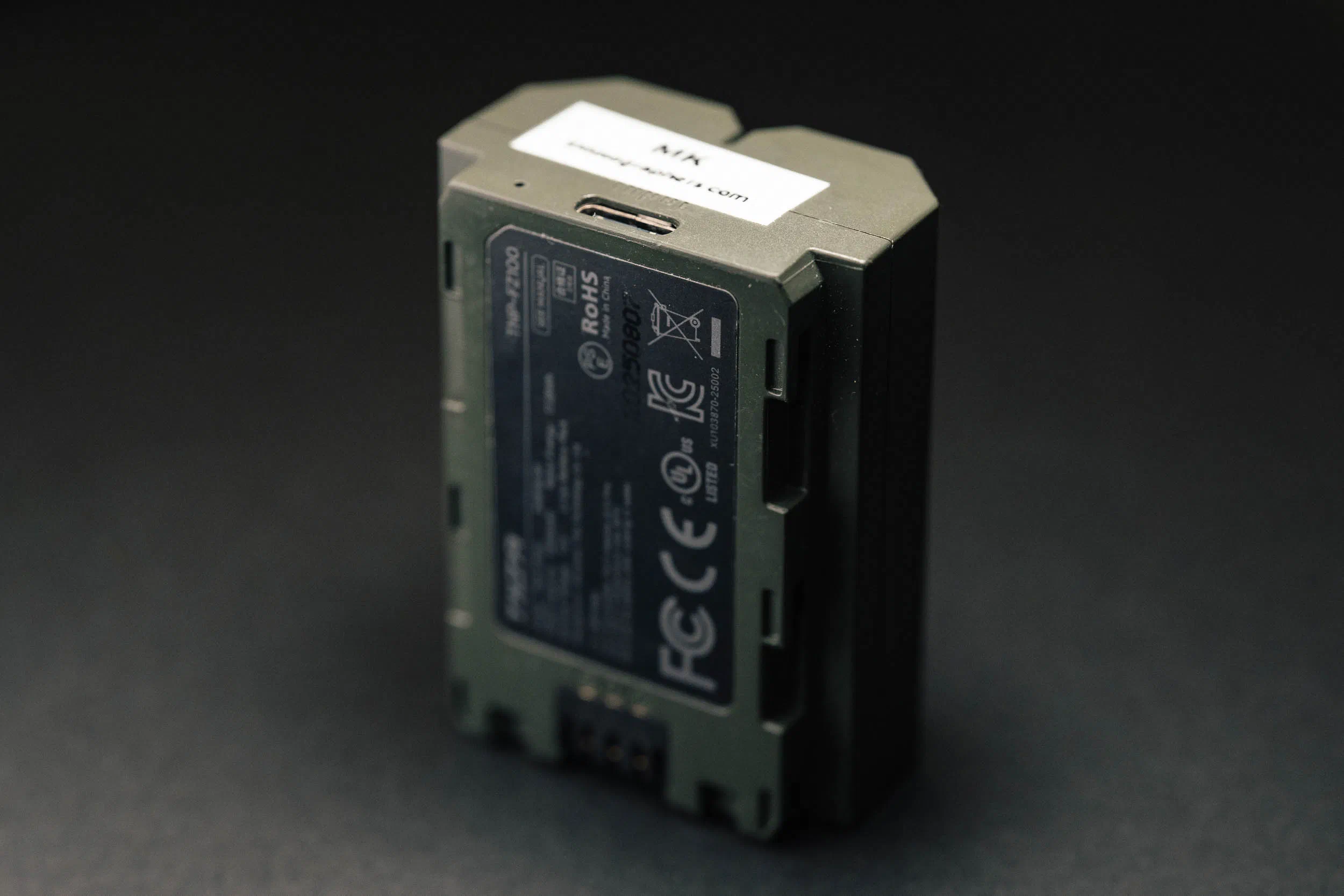
The SmallRig, Tilta, Photoolex and K&F Concept can be charged directly via USB-C. I find that extremely practical on the road, because you don’t have to carry a separate charger and can top up from a power bank. Charging power varied a lot, though: the SmallRig and Tilta drew a maximum of around 8.6 and 8.1 W respectively, the K&F Concept only about 3 W, which makes a full charge take correspondingly longer. I didn’t record a comparable value for the Photoolex. Sony and Patona skip USB-C entirely.
Price per Real Watt-Hour
The purchase price alone doesn’t say much when batteries deliver different amounts of energy. That’s why I converted the price into cost per actually measured watt-hour. Here the Sony is clearly the most expensive at CHF 3.11 per Wh. The Tilta follows at CHF 2.78, the SmallRig at CHF 2.25, the K&F Concept at CHF 1.98 and the Photoolex at CHF 1.85. The cheapest is the Patona at just CHF 1.66 per real watt-hour.
But the cheapest energy doesn’t make the best battery. The Patona is excellent value, but slightly misses its capacity rating and has the highest internal resistance. The K&F Concept is also cheap, but delivers by far the shortest runtime. For me, price is only an argument if the performance is good enough for your own work.
Ranking
To bring all the measurements together, I weighted the results and converted them into an overall score. Runtime in the camera counts the most (25 %), followed by real capacity relative to the rating (20 %), internal resistance (15 %) and price per real watt-hour (15 %). Build quality and fit count for 7.5 % each, standby loss and USB-C charging for 5 % each. Exceeding the rated capacity is capped at 100 % so that a deliberately low label doesn’t earn a bonus.
| Rank | Battery | Price | Rated | Measured | vs. Rated | Runtime 4K50 | Internal Resistance | CHF / Wh | Score |
|---|---|---|---|---|---|---|---|---|---|
| 1 | Sony NP-FZ100 | CHF 59.90 | 2280 mAh | 2678 mAh | 117 % | 102:00 min | 65 mΩ | 3.11 | 92.5 |
| 2 | Photoolex BBattery Pro | CHF 36 | 2600 mAh | 2701 mAh | 104 % | 98:41 min | 51 mΩ | 1.85 | 90.7 |
| 3 | SmallRig NP-FZ100 | CHF 45 | 2600 mAh | 2778 mAh | 107 % | 102:51 min | 88 mΩ | 2.25 | 89.1 |
| 4 | Tilta TNPF-FZ100 | CHF 49 | 2400 mAh | 2450 mAh | 102 % | 88:08 min | 120 mΩ | 2.78 | 80.7 |
| 5 | Patona Protect | CHF 30 | 2600 mAh | 2503 mAh | 96 % | 92:20 min | 129 mΩ | 1.66 | 79.3 |
| 6 | K&F Concept NP-FZ100 | CHF 30 | 2500 mAh | 2109 mAh | 84 % | 70:02 min | 120 mΩ | 1.98 | 69.8 |
Places four to six all have a clear strength, but also a clear compromise. The Tilta offers USB-C and a distinctive housing, but is relatively expensive for its performance. The Patona delivers the cheapest energy but is weak on internal resistance. And the K&F Concept is cheap but falls well behind all the others in capacity and runtime.
At the top, on the other hand, it gets really close. The SmallRig takes third place with the longest runtime and the highest measured capacity. The Photoolex lands in second with strong capacity, the lowest internal resistance and the most extensive feature set. And the Sony narrowly wins with 92.5 points. With the Photoolex, though, the measurements don’t tell the whole story. I explain in the conclusion why I can’t recommend it despite second place.
Why the Sony Still Wins
The Sony doesn’t win because it’s the cheapest or the best-equipped battery. It wins because it combines very good runtime, low internal resistance, perfect fit and build quality, and the peace of mind of the original. It sits cleanly in the camera, communicates reliably with it and has never let me down. The downside remains the same, though: you pay by far the most per watt-hour.
Real or Fake? A Look Inside a Counterfeit Sony Battery
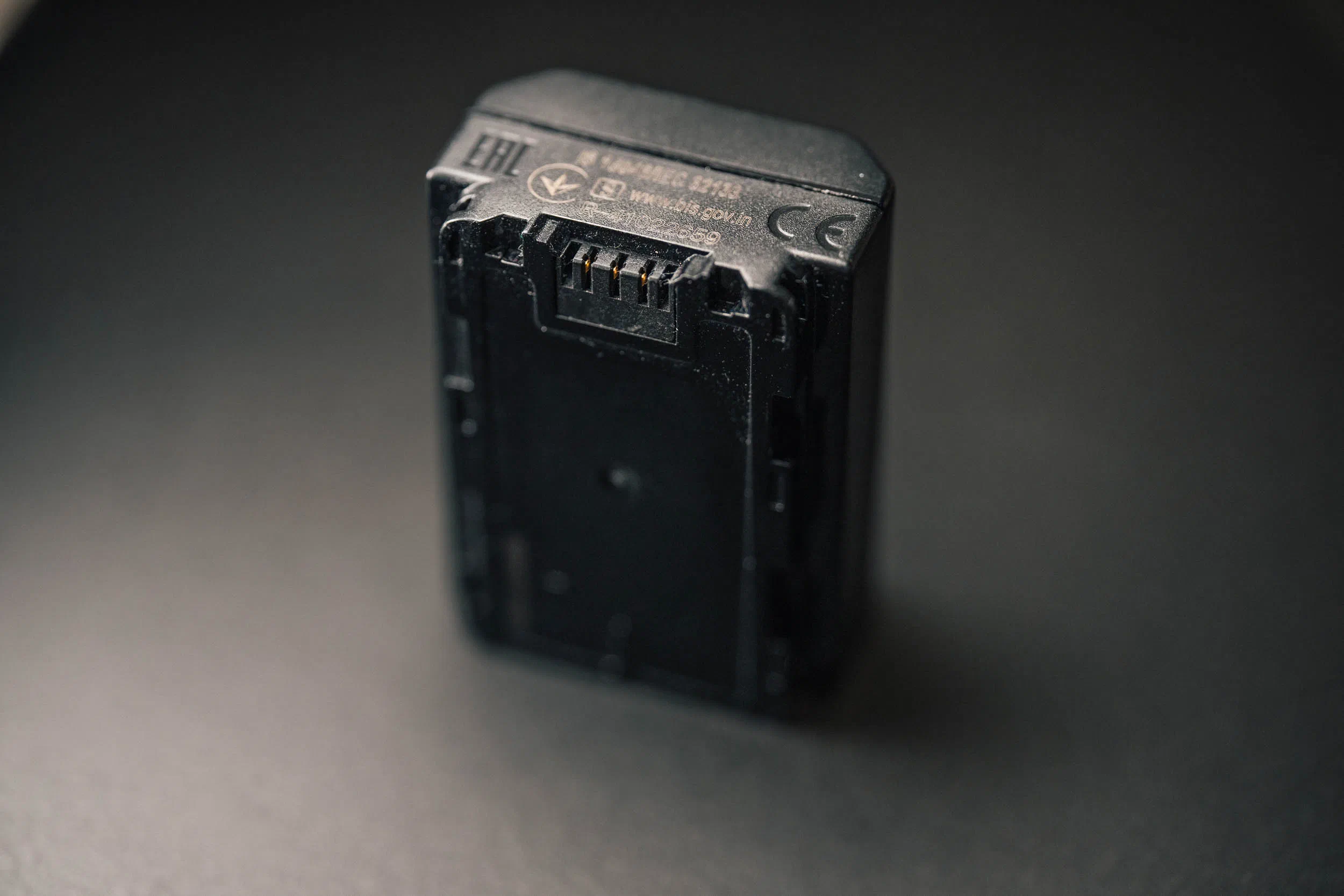
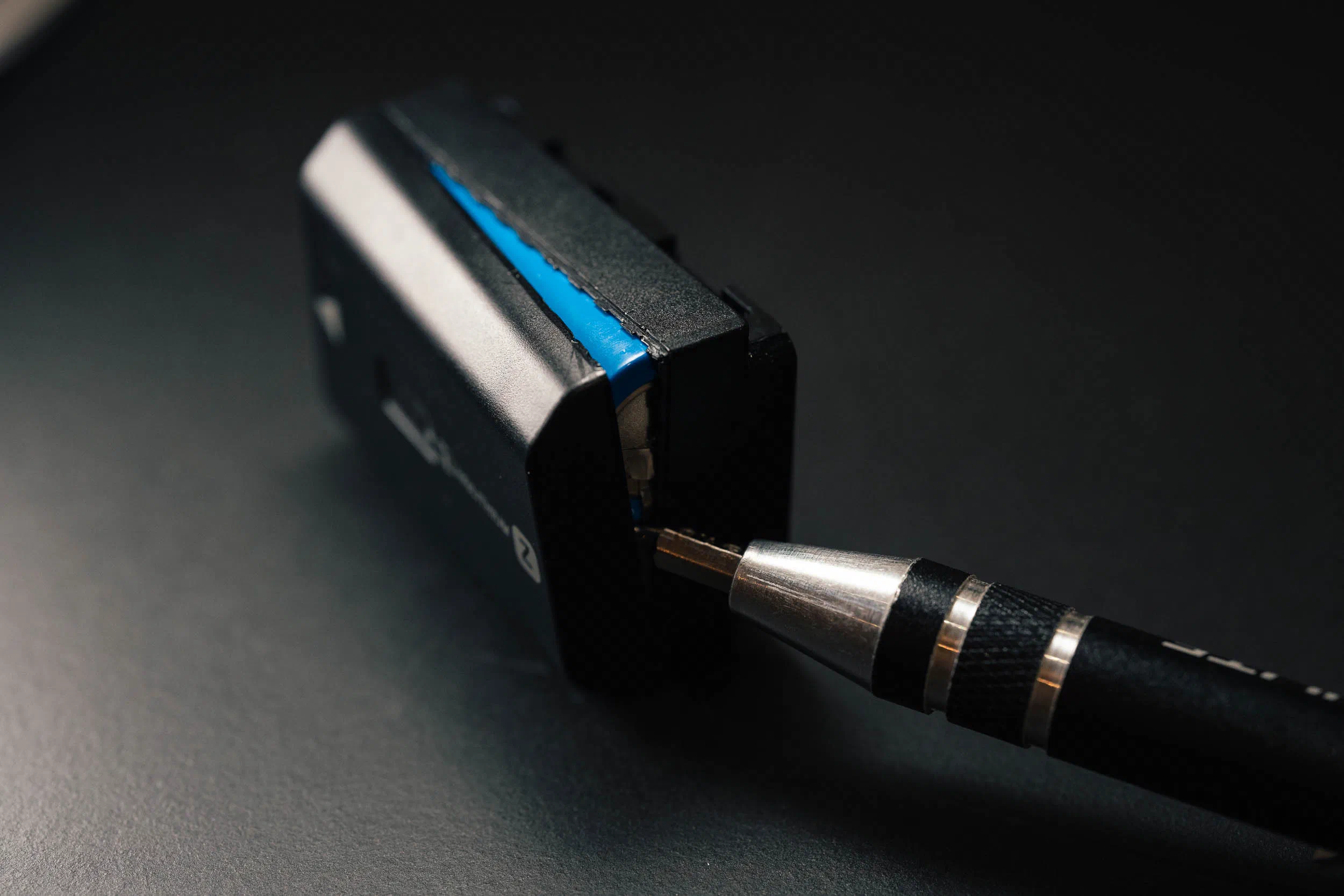
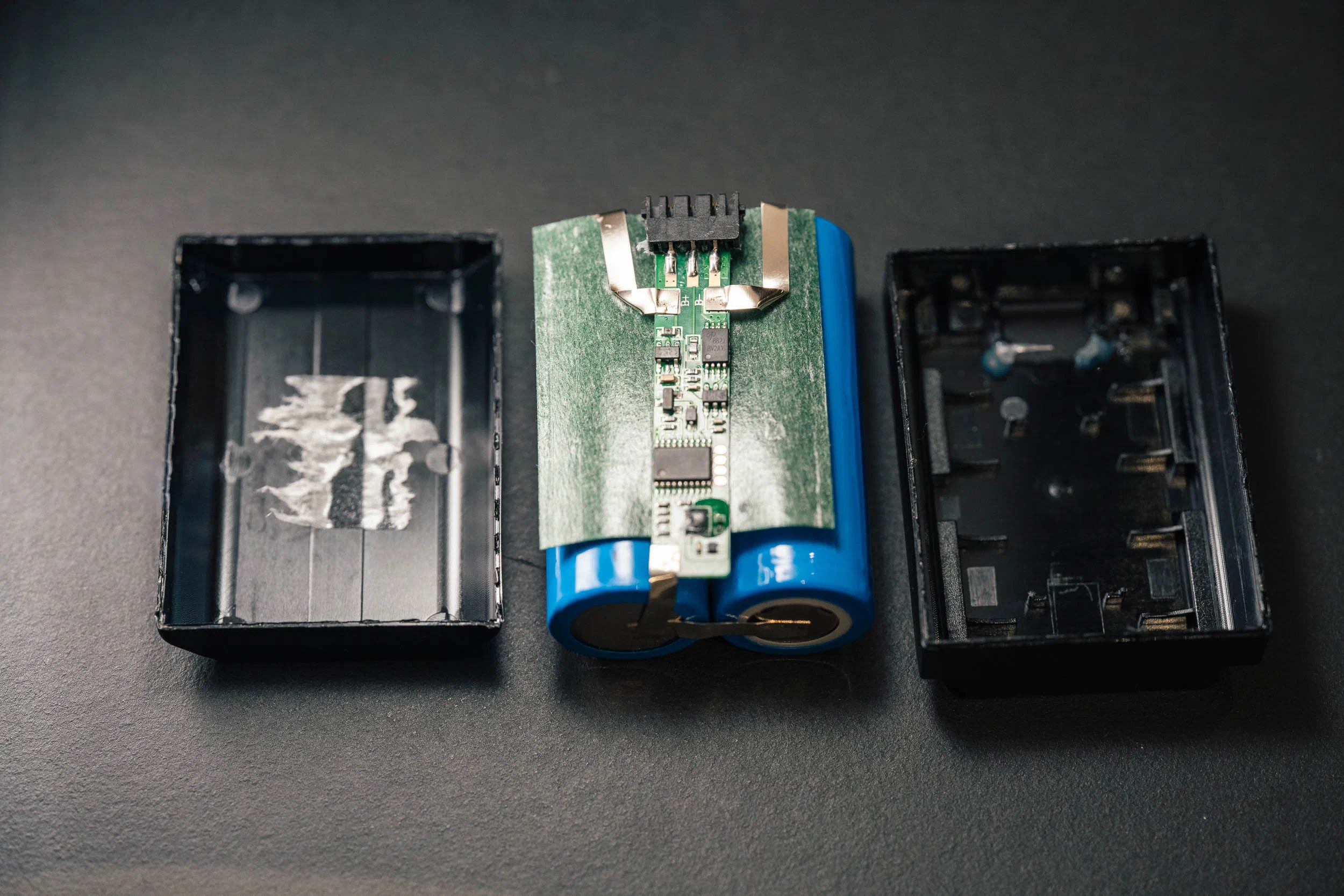
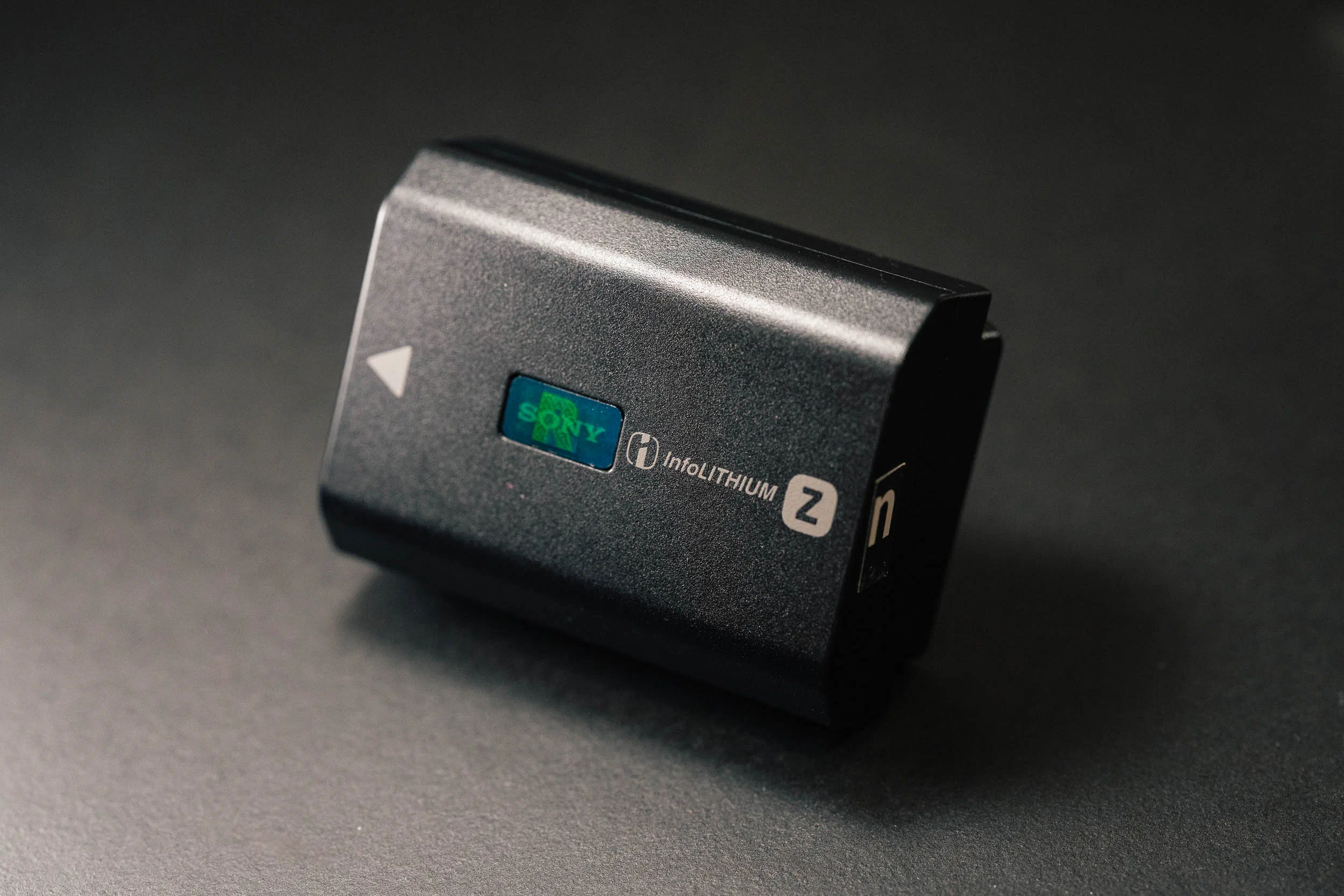
Finally, I wanted to know what’s actually inside a fake Sony NP-FZ100. From the outside, the fake looked surprisingly convincing: the housing shape is right, the “InfoLITHIUM Z” lettering is printed on, and the back even carries the same certification marks as the original, from CE and EAC to the registration number of the Indian standards authority BIS. If you only hold the battery briefly, you’ll hardly notice a difference. Only once you open it does it become clear why saving a few francs on a battery isn’t always worth the risk.
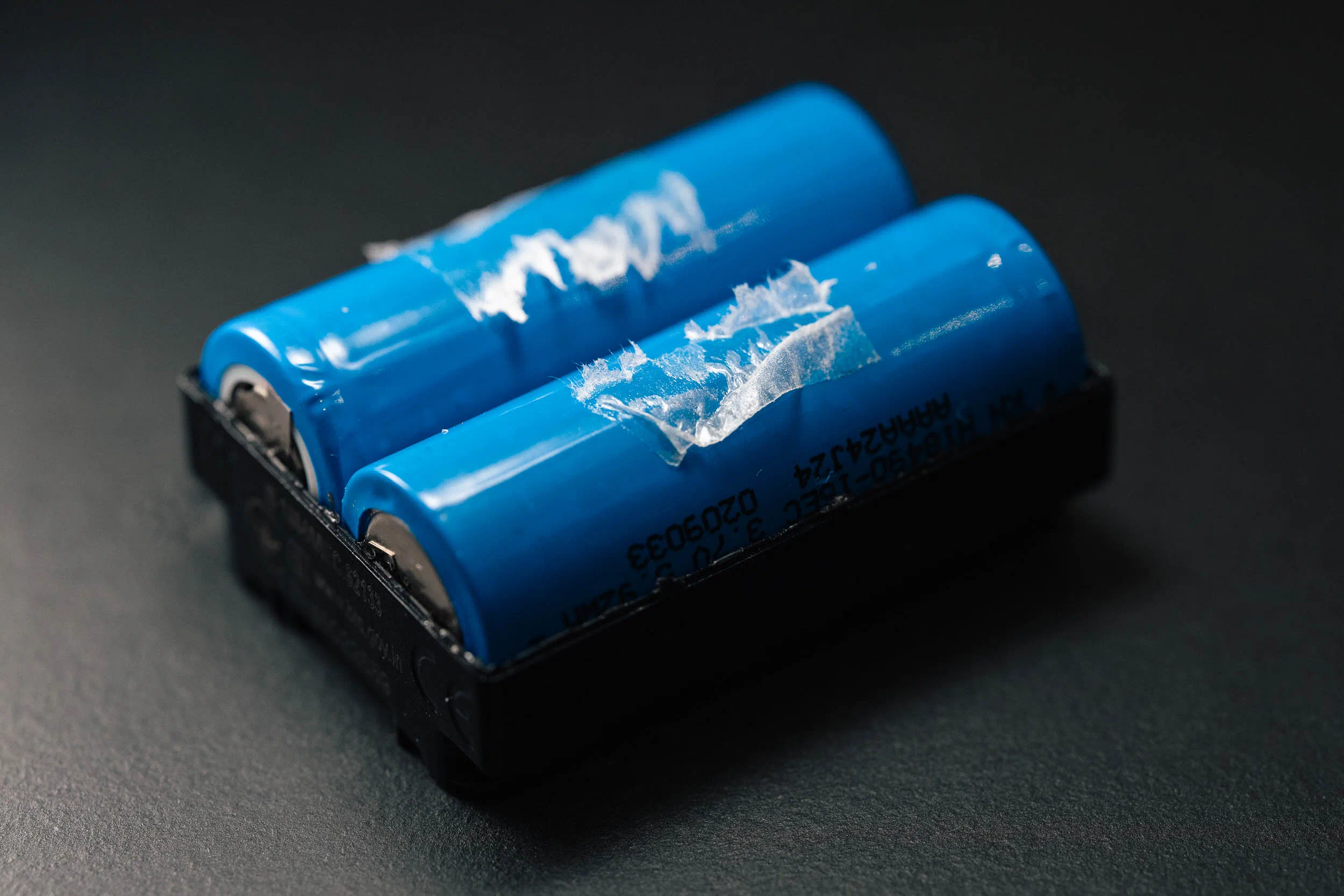
The two halves of the housing could be pried apart with a small screwdriver. Inside sit two blue cylindrical lithium-ion cells in the 18490 format in a simple plastic frame, held in place with clear tape. According to the print, each cell is rated at 3.7 V and 5.92 Wh. Connected in series, that comes to around 1600 mAh and just under 12 Wh, significantly less than the 16.4 Wh Sony specifies for the original. And in my test, the original even delivered noticeably more than its label says.
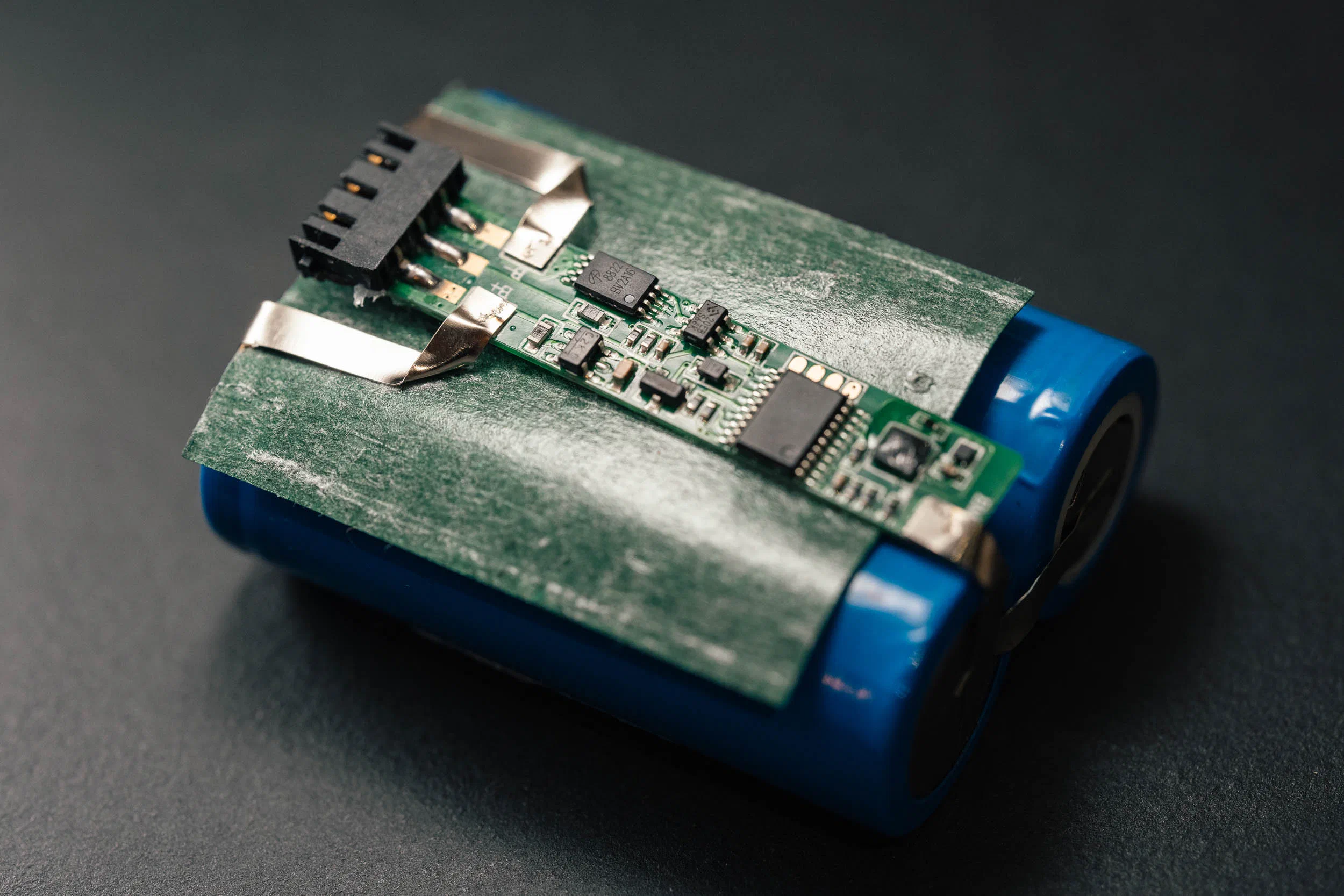
On top of the cells sits a narrow circuit board with a protection circuit, a few MOSFETs and a small controller that presumably imitates the communication of a genuine InfoLITHIUM battery with the camera. Insulating paper and nickel strips are common in battery packs, but overall the build looks improvised. Above all, you have no idea where the cells come from or how reliably the protection electronics step in during overcharging, deep discharge or a short circuit.
That’s the key point for me: a lithium-ion battery sits in a camera worth several thousand francs, rides around in your backpack and is often charged unattended. With a fake, there’s no warranty, no traceable origin and no company that stands behind the battery. If you want to buy an original Sony, only buy it from a reputable dealer, and I’d be very sceptical of supposedly genuine batteries at half price on marketplaces. If you want to save money, you’re much better off with one of the third-party batteries tested here: they cost about as little, but they’re honest about what’s inside.
Conclusion: Which NP-FZ100 Battery Is Right for You?
So does it have to be the original Sony battery? Not necessarily. For me, the Sony NP-FZ100 remains the safest all-round choice and deservedly wins this ranking. But the SmallRig shows that third-party batteries now come extremely close and offer features Sony doesn’t have at all.
If you’re looking for the best alternative, my pick is the SmallRig NP-FZ100. It had the longest runtime and the highest measured capacity in the test, charges directly via USB-C and is significantly cheaper per watt-hour than the Sony.
The Photoolex BBattery Pro, on the other hand, is one I can’t currently recommend, even though it takes second place in the ranking. On paper it’s strong: almost 99 minutes in 4K50, the lowest internal resistance in the test, and with its display, battery health, cycle counter and firmware updates the most extensive package. In practice, however, my camera occasionally reports that the Photoolex isn’t compatible. On a shoot or at an event, I need to be able to rely on my batteries blindly, and right now that’s not the case here. If Photoolex fixes the problem with a firmware update, I’ll be happy to take another look.
On a tight budget, the Patona Protect delivers the most energy per franc. Because it narrowly misses its capacity rating and has the highest internal resistance, though, I see it more as a budget tip than an overall recommendation.
I’d advise against the K&F Concept despite its low price. Almost 32 minutes less runtime than the original is simply too little for me when shooting jobs and events.
In the end, the right choice depends on what matters most to you: peace of mind, features, runtime or the lowest price. Which battery do you use in your Sony? Let me know in the comments. And whichever you choose: buy your batteries from a reputable dealer so you don’t end up with a fake in your camera.
All Batteries in the Test

Sony NP-FZ100 Battery
Features
- Original Sony Z-series battery
- 2280 mAh rated capacity (7.2 V, 16.4 Wh)
- Perfect fit and camera communication
- Charges in the camera or a Sony charger

SmallRig NP-FZ100 USB-C Battery with Charge Indicator (5297)
Features
- 2600 mAh rated capacity
- Direct charging via USB-C (approx. 2.5 h)
- Built-in charge indicator
- Fully decoded, no camera warning messages

Photoolex BB Camera Battery Pro NP-FZ100
Features
- 2600 mAh rated capacity
- Direct charging via USB-C
- Display with remaining charge, battery health and cycles
- Firmware updates for new cameras
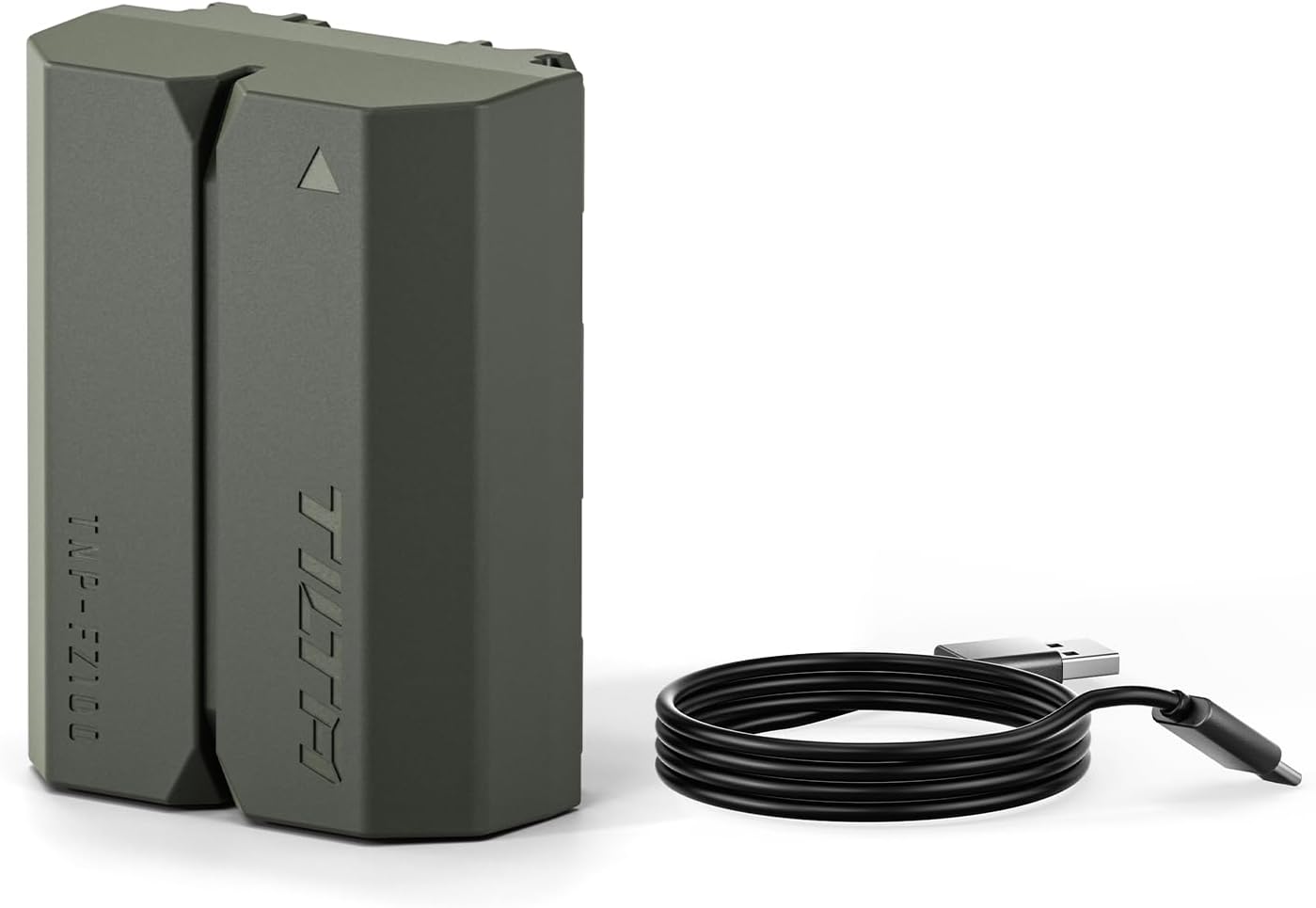
Tilta NP-FZ100 Battery with USB-C, 2400 mAh, Green
Features
- 2400 mAh rated capacity
- Direct charging via USB-C
- Distinctive dark green housing

Patona Protect Battery for Sony NP-FZ100
Features
- 2600 mAh rated capacity
- Flame-retardant, heat-resistant housing
- Brand-name cells, fast-charge capable
- Charges in the camera or a charger (no USB-C)

K&F Concept NP-FZ100 USB-C Battery (2-pack)
Features
- Direct charging via USB-C
- Charging cable included
- Compatible with all NP-FZ100 Sony cameras
Disclaimer
This comparison is not sponsored. I bought all the batteries myself, with the exception of the Photoolex BBattery Pro, which was provided to me for this test. None of the brands had any influence on the tests, the results or this article. All batteries were tested under the same conditions, and all impressions and opinions are my own.


